

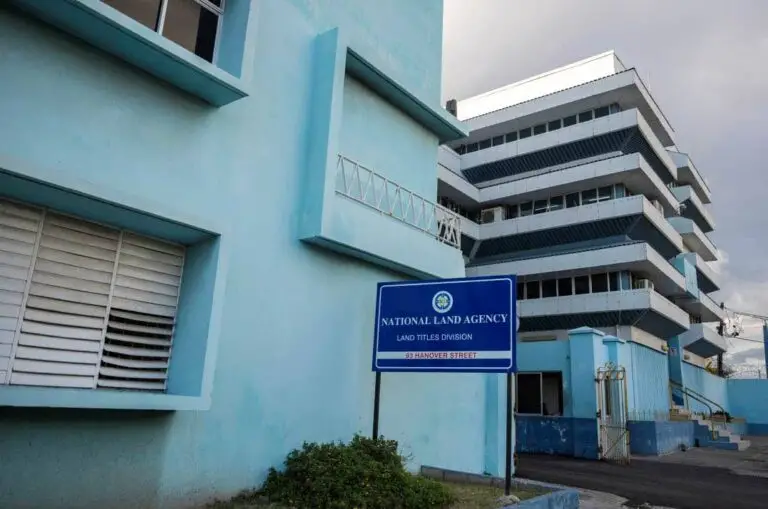

The National Land Agency (NLA), a pivotal institution in Jamaica’s land management framework, has come under heavy fire for financial mismanagement that persisted unchecked for nearly a decade. According to the latest audit by the Auditor General, the agency failed to carry out basic financial housekeeping—specifically, the timely reconciliation of multiple bank accounts.
A Trail of Delays and Lapses
Five critical bank accounts went unreconciled for periods stretching up to 92 months—over seven years—without proper review or approval. In some cases, statements lacked even basic date information, effectively eliminating any audit trail. Such lapses, according to the Auditor General, opened the door to “undetected discrepancies, fraud, and financial losses,” compromising the integrity of public funds.
Violation of Financial Protocols
The report highlights a clear breach of Section 8.7.1 (vi) of the Government’s Financial Instructions, which mandates monthly bank reconciliations. This protocol exists to ensure that actual cash holdings match recorded balances—a fundamental aspect of public sector accountability. The NLA’s failure to adhere to this standard suggests not just operational inefficiency but also a disregard for established fiduciary duties.
Asset Management Also in Disarray
Beyond bank statements, the agency also failed to properly update its asset register. While $93.4 million in assets were recorded, an additional $10.6 million in acquisitions was left off the books during the audit period. This not only violates the Government’s Comprehensive Asset Management Policy but leaves the agency vulnerable to theft, loss, and misappropriation.
Implications Beyond Accounting
The NLA is tasked with managing land titles, surveys, valuations, and geospatial data—functions that sit at the heart of Jamaica’s real estate and development sectors. Weaknesses in its financial control mechanisms therefore ripple far beyond its internal operations. They threaten public trust in how property-related affairs are managed across the country.
A Response in Motion, But Questions Remain
In response to the findings, the agency claims it is taking corrective action, including the automation of its bank reconciliation processes by 2027. However, the Auditor General cautions that ongoing internal bottlenecks—like unresolved discrepancies in past reconciliations—may hinder successful implementation of these reforms.
Conclusion: A Systemic Wake-Up Call
The audit paints a picture not merely of administrative sloppiness, but of systemic failure—one that could have cost the country significantly had discrepancies gone unnoticed for longer. With the NLA holding such a critical role in Jamaica’s land governance ecosystem, this report raises uncomfortable but necessary questions: Who was watching the watchers? And more importantly, who will ensure they’re watching now?