

The ground split open just before midnight. In seconds, a silence broken only by crickets turned into a night of screams, collapsing walls, and choking dust. Families woke in the dark to the sound of their homes caving in, children clinging to mothers, fathers digging with bare hands.
In Afghanistan’s eastern mountains, the tremor left nothing untouched. More than 800 lives were gone in an instant. Thousands more were wounded, their villages reduced to fragments of clay and timber.
The Fragility of Mud and Memory
For generations, Afghans have built homes the only way they could — from earth itself. Mud-brick walls keep out the summer heat and winter winds, but against the violence of the earth beneath, they offer no defense. Entire neighborhoods disintegrated in Kunar province. Neighbors who had shared meals and prayers hours earlier now share only grief.
The dead include returnees — men and women who had crossed back from Pakistan or Iran in recent years, carrying what little they had, determined to rebuild in their homeland. They had started again from nothing, and now that nothing has been buried under rubble.
A Nation on Its Knees
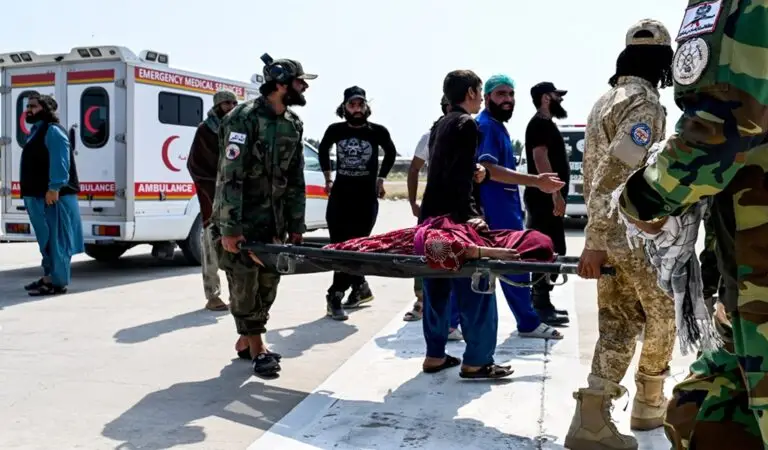
Rescue convoys struggled to reach mountain villages cut off by landslides. Some arrived by helicopter, others by clearing rocks with shovels and bare hands. People tried to call for help, but many valleys have no network at all. In those first hours, survival depended not on governments or agencies, but on the strength of neighbors who dug each other out.
“I had never heard such terror,” one survivor said. “Children were screaming in the dark. The mountain itself was alive.”
The Taliban authorities have dispatched soldiers and aircraft, while the United Nations warns that some communities are still unreachable. Every hour matters, yet in places where aid cannot land, people are left with no shelter, no clean water, and no certainty of what comes next.
Earthquakes Are Never Just Natural
Afghanistan is no stranger to seismic disaster. The Hindu Kush range is restless, its tectonic plates grinding endlessly. But what makes each quake catastrophic is not the earth itself — it is the country’s fragility. Four decades of war have hollowed out infrastructure. International aid, once a lifeline, has dwindled. Hospitals lack supplies, emergency crews lack equipment, and entire provinces face disasters with almost nothing but prayer.
The earthquake in Herat in 2023 killed over 1,500. The Paktika quake in 2022 killed over 1,000. Each time, promises of rebuilding fade before scars can heal. Each time, another corner of the country is forced back into tents and mass graves.
Life Between Ruins
Now, in the valleys of Nangarhar and Kunar, people sift through broken walls for scraps of food and blankets. Winter is not far. Those who lost their homes — often the same people who had returned from exile — now face a second exile, this time within their own land.
The quake did not just crush buildings. It shattered whatever fragile sense of stability people had begun to rebuild. For them, disaster is not an exception but a rhythm, repeating with each flood, each tremor, each war.