

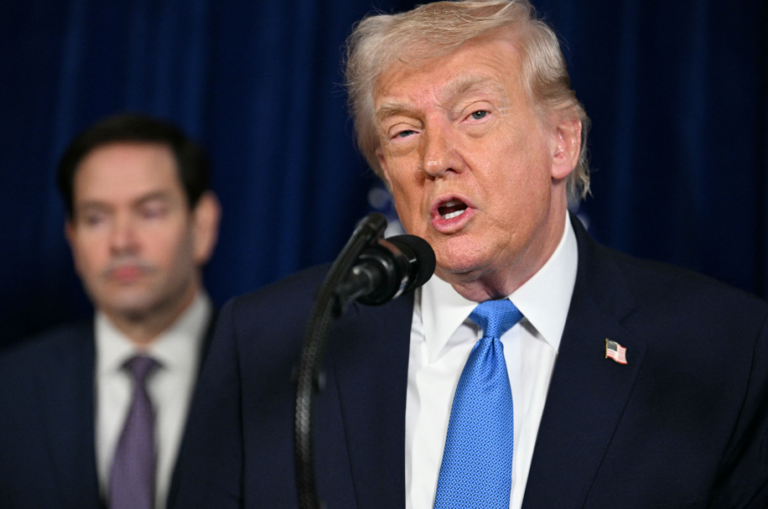

In a move drawing fierce global criticism, U.S. President Donald Trump has intensified efforts to purchase Greenland by threatening sweeping trade tariffs against a coalition of European nations. The announcement, made via his social media platform, outlined a punitive tariff regime beginning at 10% on all exports from key European allies, escalating to 25% by mid-2026, unless Denmark agrees to negotiate a sale of the autonomous Arctic island.
The list of targeted countries includes major NATO partners such as France, Germany, the United Kingdom, and the Nordic bloc, all of whom have either diplomatic or military presence in the Arctic region. Trump’s move, aimed at pressuring Denmark, represents an unorthodox application of trade policy to force territorial negotiation — a tactic unseen in modern diplomacy.
Public Uproar Across Denmark and Greenland
Protests erupted across Greenland’s capital, Nuuk, where citizens rallied under the slogan “Make America Go Away,” a defiant spin on Trump’s famed campaign motto. Greenland’s Prime Minister Jens-Frederik Nielsen joined thousands of demonstrators, underscoring the territory’s firm stance on self-determination. Traditional songs, national flags, and vocal resistance filled the streets, creating a unified front against perceived U.S. aggression.
In Copenhagen and other Danish cities, solidarity demonstrations echoed the same sentiment. Protesters called the maneuver imperialist and warned it threatened the sovereignty of a peaceful, self-governing population. Placards rejecting the idea of Greenland being “for sale” proliferated, while others accused Washington of undermining international law.
Geopolitical Fallout and NATO Strains
The fallout from Trump’s tariff ultimatum is reverberating through diplomatic corridors. Allies have expressed disbelief that economic weapons are being aimed at longstanding military partners over a territorial acquisition attempt. European officials fear the move sets a dangerous precedent — one that politicizes trade in pursuit of expansionist goals.
At the center of the controversy is Trump’s claim that Greenland is critical to U.S. national security and that Denmark is ill-equipped to defend it. In response, France and other European countries recently carried out joint military exercises on the island, signaling their commitment to protecting the Arctic from external pressure. The U.S., ironically, was invited to participate but declined.
Legal Uncertainty and Economic Volatility
It remains unclear under what authority the U.S. president intends to enforce such tariffs, given the lack of congressional approval or established precedent for coercing sovereign land transfers via economic sanctions. Market analysts warn that escalating trade tension with Europe could unravel progress made in recent U.S.-EU negotiations aimed at reducing tariffs and stabilizing transatlantic trade.
In parallel, a U.S. congressional delegation visiting Denmark distanced itself from the administration’s stance. Led by Senator Chris Coons, the group emphasized that Trump’s Greenland proposal does not reflect mainstream American views and expressed support for continued Danish autonomy over the island.
Greenlanders Stand Firm
Greenlanders themselves remain overwhelmingly opposed to any transfer of sovereignty. A national poll conducted earlier this year showed a staggering 85% rejecting U.S. annexation, with only 6% expressing support. For residents of the icy territory — long accustomed to geopolitical maneuvering — this latest episode feels like a reversion to Cold War-era power games.
“This isn’t about purchase price or mineral rights,” said Avijaja Rosing-Olsen, a prominent Greenlandic activist. “This is about dignity, and we are not for sale.”
As global eyes turn toward the Arctic, the standoff over Greenland has revealed something deeper: a clash between transactional geopolitics and the will of a people determined to chart their own future.