

Kingston, Jamaica — January 20, 2026
In a decisive address that pulled no punches, Prime Minister Andrew Holness shifted the national dialogue away from symbolic independence and toward financial sovereignty, calling it the only true measure of freedom in the modern era.
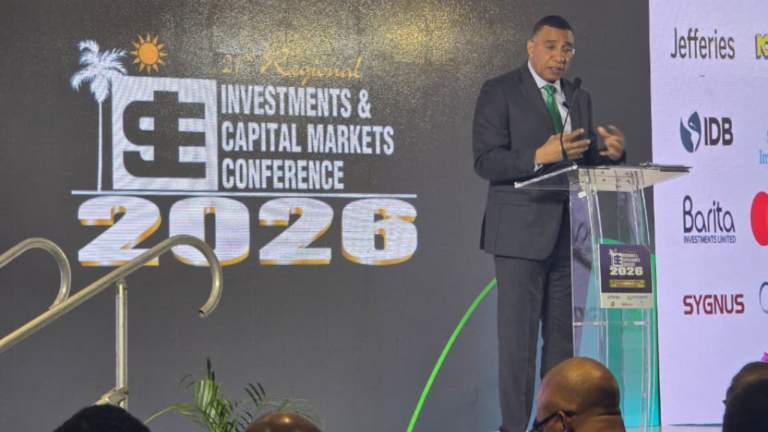
Speaking at the 21st Regional Investments and Capital Markets Conference, Holness made it clear: political rhetoric means little without the economic muscle to support it. “We’ve inherited pride from political independence,” he said, “but I’m fighting for economic independence — that’s the real frontier.”
From Pride to Power
Holness framed Jamaica’s economic trajectory not as a debate, but as a mission. While generations before celebrated flags and constitutions, he argued that today’s leadership must build balance sheets and secure capital access. His administration’s focus, he asserted, is on positioning Jamaica to negotiate—not beg—at the global table.
“We’re not chasing fantasies anymore,” Holness declared. “We’re anchoring ourselves in fiscal realism. That’s what shields a country.”
Post-Storm Confidence and Global Leverage
Referencing the nation’s swift rebound from the devastating blow of Hurricane Melissa, the Prime Minister credited Jamaica’s disciplined financial governance for securing over US$6 billion in low-conditionality international financing. He dismissed critics who fixated on the label of “loan,” emphasizing instead the leverage and respect such arrangements signal in international markets.
“We got the money because we earned credibility,” Holness said. “Not through gimmicks. Through consistency.”
Redefining the Private Sector
In a sharp pivot from traditional boardroom definitions, Holness redefined the private sector through the lens of real Jamaican labor — from banks to roadside vendors.
“The woman frying fish at Border? That’s the private sector,” he emphasized. “Her economic freedom matters just as much. Maybe more.”
This wasn’t mere symbolism. It was an assertion of dignity tied to productivity. He challenged stakeholders to abandon elitist views and instead see national strength in every micro-enterprise that feeds, educates, and uplifts.
The Quiet Power of Small Nations
Holness also touched on the changing nature of geopolitical power. In an era no longer ruled by military might alone, he stressed that even small nations can exercise global influence if they understand and control their economic levers.
“Statecraft has evolved,” he said. “We need to evolve with it.”
Conclusion: A Future Anchored in Agency
Holness’ remarks marked a clear ideological shift — away from ceremonial patriotism and toward material empowerment. His message was one of sober confidence: Jamaica’s place in the world will no longer be dictated by legacy or dependency, but by its command over the levers of capital.
If this address is any indicator, Jamaica’s next phase won’t be narrated by nostalgia — it will be written in numbers.