

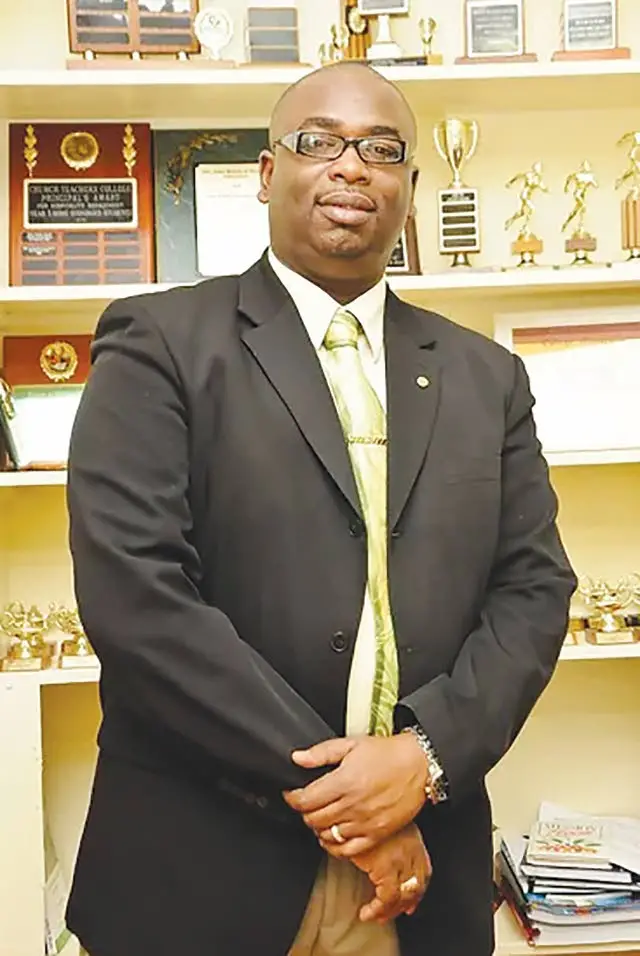

Dr. Garth Anderson, Dean of the Teachers’ Colleges of Jamaica (TCJ) and Principal of Church Teachers’ College, has vehemently defended the quality of teacher-training institutions in response to recent criticisms accusing them of producing underqualified teachers. These criticisms emerged after university lecturer Oneil Madden published a column in the Jamaica Observer alleging that the curriculum at teachers’ colleges falls short of Caribbean Advanced Proficiency Examination (CAPE) standards and does not adequately prepare graduates for teaching the Caribbean Secondary Education Certificate (CSEC) and CAPE syllabi.
Madden’s critique suggested that many educators are certified but lack the practical competence needed to deliver the curriculum effectively. He further criticized some lecturers for allegedly being underqualified and not engaged in research, which he claimed affects their ability to adequately train students.
In a robust rebuttal, Dr. Anderson refuted these claims, asserting that they do not reflect the true state of the teacher-training system. “The article does not accurately represent the reality of our colleges or our teacher-training programs,” Dr. Anderson stated. He emphasized that the TCJ collaborates closely with The University of the West Indies (UWI) to continuously revise and update the curriculum, a process that involves reviewing around 400 courses to ensure they meet current educational standards.
Dr. Anderson highlighted that the teacher-training programs are designed to align with the evolving needs of the education system. He cited the incorporation of the Primary Exit Profile (PEP) program and CAPE requirements into the curriculum as examples of this alignment. “The assertion that our graduates are not prepared to teach CAPE syllabi is erroneous and unfounded,” he argued.
Addressing Madden’s criticisms of teacher trainers, Dr. Anderson explained that lecturers at the colleges are required to hold advanced qualifications, including master’s or doctoral degrees in their content areas. “To teach in our colleges, lecturers must have qualifications one step ahead of what is being taught. This includes additional coursework if necessary,” he noted.
Dr. Anderson also rejected the notion that Jamaican teachers are underqualified, pointing out that graduates from Jamaican teacher-training colleges are in high demand internationally. “Our students are being recruited for positions overseas even before they complete their studies,” he said, mentioning opportunities in Dubai, Europe, North America, and the Caribbean.
The TCJ Dean acknowledged that while teacher quality is crucial, other factors also influence student performance. He mentioned issues such as inadequate resources, challenges in early childhood education, and the need for comprehensive student assessments. “It’s important to recognize that various factors affect student performance, not just the quality of teaching,” Dr. Anderson added.
Dr. Anderson concluded his defense by emphasizing the ongoing commitment of teachers’ colleges to maintain high standards and adapt to changes in education. “We constantly review and update our curriculum to stay at the forefront of teaching and learning. The quality of our institutions is evidenced by the caliber of students we produce,” he asserted.
In closing, Dr. Anderson challenged critics to provide concrete evidence to support their claims, labeling the criticisms as reckless and irresponsible without substantiation. He reaffirmed the integral role of teachers’ colleges in Jamaica’s educational landscape, asserting their significant contribution to national development.