
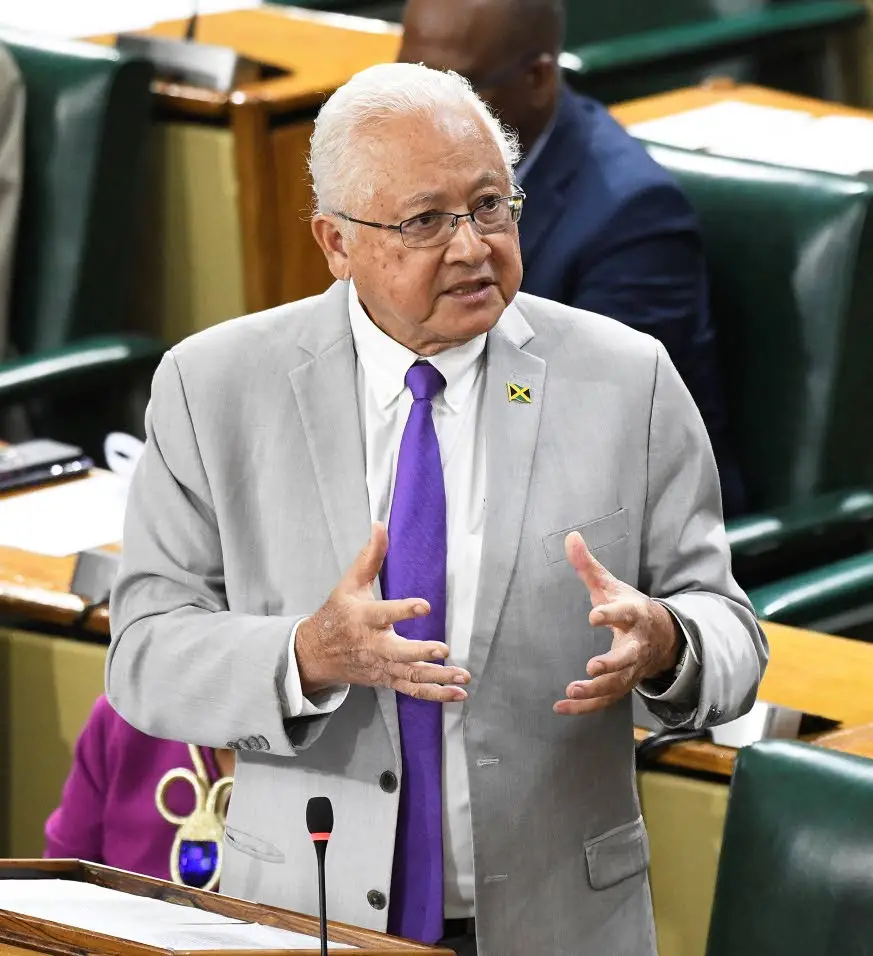

Justice Minister Delroy Chuck has firmly opposed the notion of paying Justices of the Peace (JPs) for their services, despite growing calls from some members of the public. Addressing a group of JPs in Port Maria, St. Mary, last Thursday, Chuck emphasized the essential nature of the role as a voluntary public service, underscoring that JPs should remain committed to serving their communities without financial reward.
“I recognize the incredible efforts of JPs who go above and beyond in their service,” Chuck said. “However, the answer remains no when it comes to compensation. This is a role rooted in trust, not profit. You serve because you are trusted members of your community.”
The question of compensating JPs for their work resurfaced recently after a letter to the Jamaica Observer highlighted a case where a JP, charged with corruption, cited financial hardship as the reason for charging fees for their services. St. Andrew JP Nicholas McDavid, who wrote the letter, argued that while the individual’s actions were unacceptable, the situation raised important concerns about the lack of support for JPs.
McDavid suggested that the financial strain on JPs, particularly those who are retired or otherwise financially vulnerable, must be addressed through systemic reforms. He proposed creating a task force, involving the Ministry of Justice and local custodes, to explore potential ways to provide greater financial support to JPs without compromising the integrity of the position.
In response, Norris Rhoomes, head of the St. Andrew Justice of the Peace Association, strongly opposed any notion of financial compensation, emphasizing that accepting payment would erode the public’s trust in JPs. “Once you start charging, you compromise the role itself,” Rhoomes wrote in another letter to the Observer.
Chuck reiterated his stance on the issue, warning that JPs caught accepting or soliciting payment for services would face decommissioning. “If you cannot serve voluntarily, it’s time to step down,” Chuck stated, making it clear that the role of JP is about public service, not financial gain.
While the debate continues, the core issue remains clear: Justices of the Peace are expected to uphold a high standard of integrity and public trust, with their work being motivated by a sense of civic duty rather than financial compensation.