
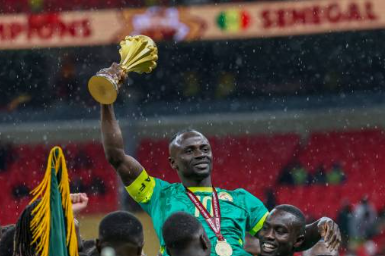

Dakar erupted into unfiltered joy on Tuesday as the national football team of Senegal made their victorious return from Morocco, parading their hard-fought Africa Cup of Nations title through the capital. The atmosphere? Electric. The turnout? Monumental.
The Capital Stalls for the Kings
From the moment the team’s motorcade pulled out, the city ground to a celebratory halt. People lined every inch of pavement, balconies, rooftops, and flyovers. Markets emptied, offices paused. From mechanics in oil-stained overalls to children waving homemade flags, the crowd was a national mosaic.
Cheers surged like waves as the team’s open-top bus inched forward. Horns blared. Drums beat. Vuvuzelas screamed. Every foot of progress was a crawl through reverence.
A City Possessed
At the heart of it all was Patte d’Oie—humble, raw, and now immortalized. What began there spilled across Dakar in a tide of human movement. Cars became makeshift parade floats, vendors transformed into memorabilia moguls, and walls were scaled just to steal a glimpse. Entire families clung together atop pickup trucks, serenading their heroes with improvised chants.
Overhead, helicopters buzzed low, capturing the scale of a country’s unshakable pride. Security forces flanked the route, largely standing down in quiet awe at the emotional scale of it all.
Politics Paused, History Saluted
Senegal’s president and prime minister were among the first to greet the returning champions after their midnight arrival. But on the streets, it was the people who issued the real reception—raw, unfiltered, and unanimous.
For many, this wasn’t just about a football match. It was about narrative redemption. About defying odds and silencing doubters. About holding composure when chaos threatened to swallow the final.
Not Without Controversy, But Unshaken
The final in Rabat had descended into mayhem after a questionable penalty call incited a walk-off from Senegal’s squad. But the calm voice of Sadio Mane changed everything. He stayed. He mediated. His act of leadership brought his team back onto the pitch, where they ultimately crushed Moroccan hopes in extra time with a thunderbolt from Pape Gueye.
That single goal, fired into the net like a national prophecy fulfilled, now echoes through the streets of Dakar as folklore.
A Nation Transformed
The win adds a second star to Senegal’s AFCON legacy, but this celebration felt like a first. If 2022 was a breakout, 2026 was a coronation. For fans like 49-year-old Abdulai Sy, the parade was more than a party—it was an affirmation. “This is pride. This is our moment,” he shouted over the rattle of drums and chants.
Meanwhile, the side economy around the celebration flourished. Street vendor Amath Ndiaye—who typically sells tissues at intersections—was clearing out his stock of flags, whistles, and replica jerseys. “Football made me rich this week,” he said, laughing.
Beyond the Cup
The parade isn’t just a victory lap. It’s a declaration. From the rough blocks of Patte d’Oie to the polished coastline of the Corniche, every street now holds the footprint of a nation that has realized its potential. Dakar, for a moment, is no longer just the capital of Senegal. It is the capital of African football.
And as the team heads for the presidential palace, one thing is clear: this is not just celebration. It’s ceremony.
The Lions didn’t just win the cup. They brought it home.