

In the aftermath of Hurricane Melissa, the conversation around child recovery has taken a significant turn — with experts urging that play, often overlooked, is not just a pastime but a vital therapeutic intervention.
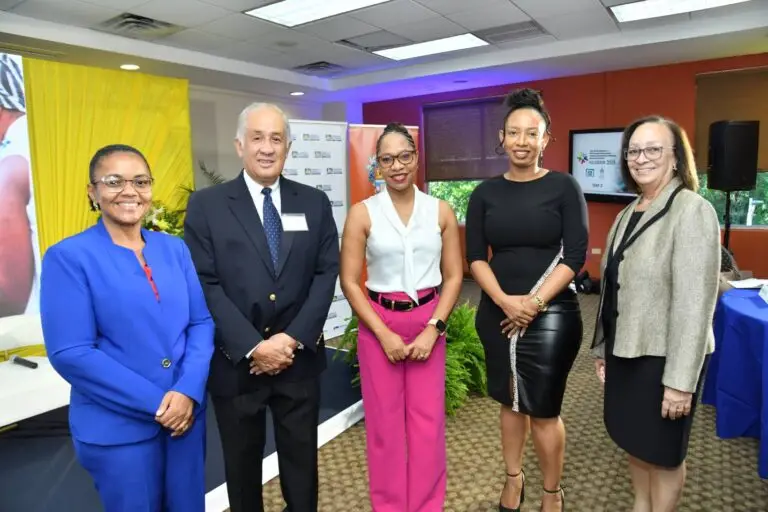
Addressing a regional gathering of educators and policymakers at the Early Childhood Education Colloquium in Kingston, renowned child health advocate Professor Maureen Samms-Vaughan emphasized that play holds the key to buffering children from the psychological aftermath of crisis. “When children play, their stress levels drop. They become more resilient,” she said. “It’s not optional. It’s essential.”
The Power of Play in Crisis Recovery
Scientific findings show a direct link between frequent play and reduced cortisol levels — the hormone tied to stress. Professor Samms-Vaughan pointed out that children who are given space and resources to play demonstrate greater emotional stability and adaptability, even in the face of disaster. “Play builds emotional muscle,” she said. “It’s how children make sense of chaos.”
She urged that alongside efforts to restore physical infrastructure, equal attention must be paid to restoring social and emotional anchors for children. “Getting kids back together, even in a tent, allows them to play. And that alone improves their mental health,” she explained.
Lessons from the Past: Katrina as a Case Study
Drawing on the long-term aftermath of Hurricane Katrina in the United States, Professor Samms-Vaughan highlighted the grim statistics: elevated reports of poor health in children years after the event, delayed cognitive recovery, and lasting emotional distress. “It took a decade for mental health markers to normalize,” she said. “And the children who remained displaced the longest, or were forced into unfamiliar schools, suffered most.”
The implications for Jamaica and the wider region are clear: speed, structure, and safe spaces matter. Reconnecting children with routine — particularly in safe, familiar environments where they can play — is a proven path to recovery.
A Wake-Up Call for Stakeholders
Samms-Vaughan didn’t hold back on what’s standing in the way. Cultural stigmas around play being “frivolous,” academic pressure from families, and unsafe community conditions have all conspired to sideline a child’s most important tool for self-regulation. “Too many of our children are locked indoors, behind screens or homework, without a moment to breathe — let alone play,” she warned.
She called for a cultural reset: one where play is integrated into classrooms, parenting programmes, and urban design. “We need more parks, safer streets, and school timetables that make space for unstructured, joyful movement,” she said. “Play should be treated with the same seriousness as math or reading.”
Early Play, Not Just Early Work
Her message to educators was particularly pointed. “We pride ourselves on ‘early work’ in Jamaica — children starting academic drills from young. But I’m saying, let’s also have early play. Let’s normalize joy and imagination in the early years.”
The Colloquium, hosted by JN Foundation in collaboration with UWI and the Dudley Grant Resource Centre, served as a reminder that rebuilding after a disaster is more than physical reconstruction. It is also about emotional scaffolding — and for children, that scaffolding is made of laughter, running feet, and the freedom to imagine.
Moving Forward: Policy and Community Action
Samms-Vaughan’s recommendations were clear: embed play into early childhood education curricula, train teachers to facilitate it with intention, build public spaces that invite it, and equip parents with tools to encourage it. Unsupervised, self-directed play must be protected — not just tolerated — if a generation of resilient, emotionally healthy children is to rise after the storm.
“Play is not a luxury,” she concluded. “It is a fundamental right — and one of the most powerful tools we have to help our children heal.”