

Jamaica’s leading rum manufacturer has confirmed it is fully stocked for the holiday season and primed to respond to market shifts, signaling a rebound in the western parishes following October’s Hurricane Melissa. Despite infrastructural damage, the company reports minimal disruption to domestic distribution and a strong recovery trend among its key community bar partners.
The disruptions that triggered last year’s shortfall have been resolved, and executives are now positioning for a 2026 market that may oscillate between austerity and rebound consumption. The company’s leadership characterized the domestic environment as stabilizing, with sufficient stock to meet end-of-year demand and flexibility built into its supply chain to respond dynamically to shifts in consumer behavior.
Inventory Preparedness and Strategic Timing
By the time Hurricane Melissa made landfall, all domestic rum allocations had already been bottled and distributed to Kingston from production sites in St Elizabeth and Clarendon. This buffer, built into the calendar well before the storm season, prevented any shortages.
“The timing worked in our favour,” one executive stated. “All local production was wrapped up before the hurricane arrived. Every bottle needed for the holidays is already on the shelf.”
While port congestion remains a concern for export logistics and inbound raw materials for 2026, those disruptions are not expected to affect local retail supply or pricing.
Adaptive Production Strategy
Internally, the company has shifted its balance sheet strategy — holding larger volumes of dry goods (bottle caps, labels, cases) rather than committing capital to finished goods — allowing for agile deployment of stock as demand rebounds or retracts.
“If we see demand return earlier than projected, we’re ready to ramp up immediately,” the executive noted. “But if the market remains cautious, we haven’t overextended ourselves either.”
This approach reflects a broader trend in Jamaican manufacturing: conserving liquidity while preserving velocity.
Community Bars: The Anchor of the Industry
What sets Jamaica apart from many rum-consuming nations is its dominant “on-trade” market — community bars, not retail shelves, drive the bulk of consumption. These local watering holes, scattered across every parish and often painted in the colors of their supplier, are where 70% of all spirits sales take place.
“They’re the engine,” the commercial team stated. “That’s where demand is born — not in duty-free shops, not in the supermarkets. Real Jamaicans having real rum after a real day’s work.”
The company’s investment in this sector is substantial — not just in branding, but in subsidizing infrastructure, maintenance, and compliance costs for thousands of small, independent bar operators. From paint jobs to refrigeration units, the company ensures these outlets are operational and visually aligned with its portfolio.
Reopening in the West
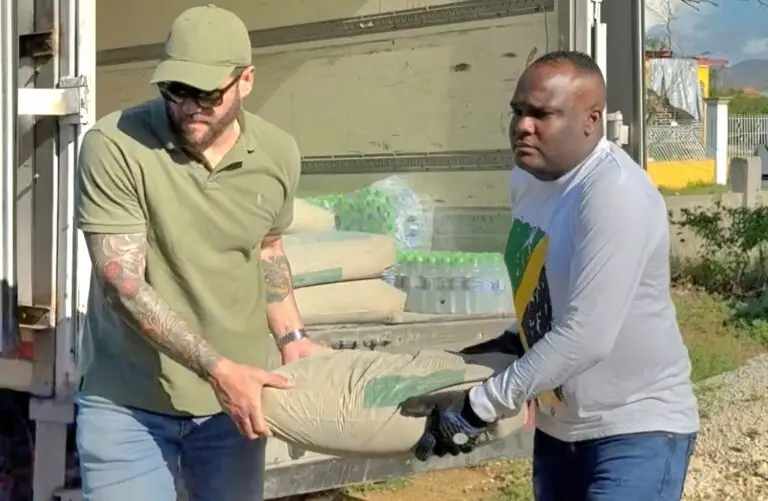
Following Hurricane Melissa’s impact, particularly in St Elizabeth and other western parishes, the first signs of commercial life are returning. Approximately 70% of affected trade clients have resumed orders, though some locations, particularly along Jamaica’s southwestern coast, remain in recovery mode.
Field teams on the ground report that bar owners, bartenders, and distributors are eager to restart commerce as rebuilding efforts gather pace. “The return of these bars is not just good for business,” one executive remarked, “it’s critical for livelihoods.”
The company has begun regional assessments to assist the most impacted locations, particularly those where damage has threatened the viability of reopening without intervention.
Price Monitoring and National Brand Integrity
In response to concerns about hurricane-related price increases, the company has implemented checks across its retail network to discourage opportunistic gouging. As of early December, pricing remains in line with pre-hurricane rates.
“We’re tracking pricing carefully,” the executive said. “No one should be paying more because of a natural disaster — we’re working to keep Jamaica’s access to its cultural staples intact.”
Strategic Global Echoes
While its rum brands dominate the domestic market — commanding over 85% share in the overproof segment — the company’s strategic bets extend beyond the island. Jamaica’s tourism sector, with millions of annual visitors, acts as a global amplifier for its products. International visitors often encounter the flagship white rum and its premium Appleton Estate siblings for the first time in local bars, creating export demand downstream.
“We don’t need a commercial on American TV,” the executive quipped. “We’ve got Black River, Negril, and Portland for that.”
Production Power and Festive Readiness
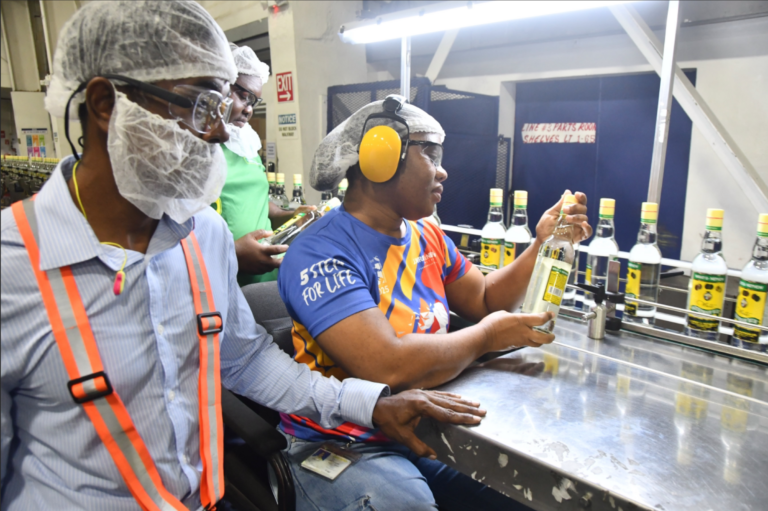
With daily bottling volumes exceeding 25,000 cases of white rum (split between 750ml and 1-litre formats), the company’s production capacity remains unmatched in the region. That muscle now underpins its readiness heading into peak seasonal demand.
Manufacturing leadership confirmed that inventory buffers currently represent two to three months of standard demand — a sharp contrast to the previous year’s shortfall. In addition to its overproof stalwarts, Red Label Wine, Magnum, and other popular portfolio items are well-stocked — particularly important for Christmas baking traditions and festive cocktails.
Outlook: A Calculated Optimism
Looking into early 2026, the company remains cautiously optimistic. Demand in hurricane-affected zones is expected to rise as reconstruction efforts fuel disposable income. However, its leadership is equally aware that rum is a discretionary product — and that people prioritize food, shelter, and work before celebration.
The strategy moving forward is one of watchfulness and adaptability: no overproduction, no speculation, but complete readiness to match Jamaica’s heartbeat as it accelerates back to normalcy.
“Rum is not a necessity,” the executive concluded. “It’s a signal. When bars are open, when people are buying drinks, it means Jamaica is healing.”