
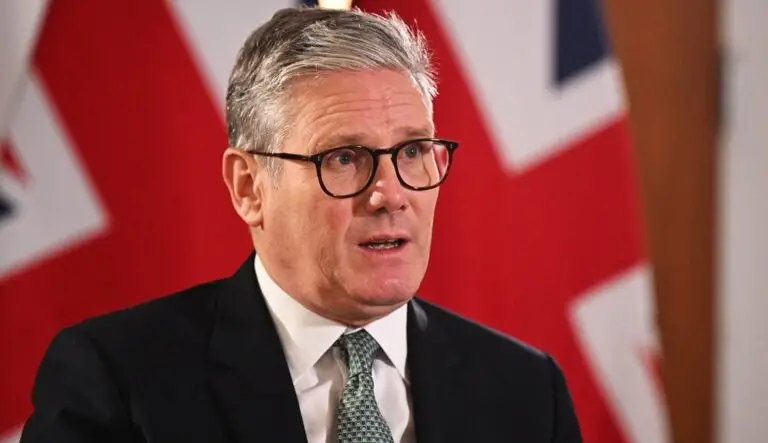

British Prime Minister Keir Starmer has issued a stern warning to businesses, stating that his government will no longer tolerate the ongoing reliance on overseas workers due to a lack of investment in training UK talent. His comments come as part of a broader strategy to reduce migration levels, particularly in sectors hit hardest by labor shortages.
The UK recorded net migration of 764,000 in 2022, a significant increase from 685,000 the previous year, with the majority of new arrivals coming from outside the European Union. Since Brexit, which formally took effect in 2020, the UK has faced challenges in recruiting workers domestically due to the end of free movement for EU nationals, causing critical staffing issues in sectors like construction and healthcare.
Speaking on BBC Radio, Starmer addressed the need for a more sustainable approach to filling jobs. He acknowledged the importance of migrant workers but emphasized that this cannot be a long-term solution. “We won’t turn away businesses in need of workers now, but this reliance on immigration can’t continue indefinitely,” Starmer said. “We must develop a strategy where the UK workforce is skilled and ready to meet demand.”
His remarks come at a time when the UK government is under increasing pressure to reduce both undocumented migration and the number of employment-based visas. In response, the Prime Minister unveiled new measures aimed at cutting net migration, which include a detailed review of sectors that depend heavily on foreign workers and tougher regulations on visa sponsorships.
“Yearly skills shortages assessments will be conducted, and sectors most reliant on migrant labor will be held accountable for failing to invest in local training,” a government statement explained. Starmer also pointed out a concerning trend: an increase in visa applications for jobs traditionally filled by apprenticeships in the UK, signaling deeper issues in the country’s education and training systems.
Starmer’s call for change follows his first speech at the Labour party conference as prime minister, where he reiterated his commitment to addressing the skills gap. “We need a comprehensive skills strategy,” he said, “to ensure that our workforce is prepared, reducing our dependency on immigration while ensuring we have the talent necessary to grow our economy.”
While recognizing the important role migration plays in the UK’s economic and public service sectors, Starmer called on businesses to invest more in training local talent, especially young people. “We cannot continue to let down the next generation by not providing them with the opportunities and training they need,” he stressed.
Starmer’s focus on domestic workforce development marks a significant shift in his government’s approach to immigration and the labor market, with the goal of creating a more self-sufficient, skilled workforce in the UK.