
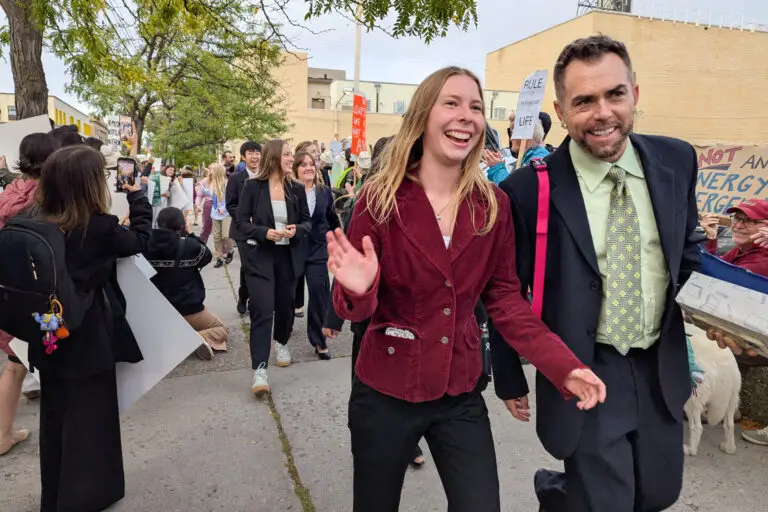

MISSOULA, Montana — In a scene that felt both courtroom and climate battleground, a group of youth plaintiffs challenged the highest office in the land—not with signs or protests, but with testimony and constitutional argument.
At the heart of the trial is a bold allegation: that presidential executive orders aimed at supercharging fossil fuel production are not just misguided policy, but a direct violation of the fundamental rights of America’s youth.
This isn’t merely a climate case. It’s a generational reckoning.
The Accusation: Rights Sacrificed for Oil
The plaintiffs, 22 young Americans aged between 9 and 22, assert that their constitutional rights to life, liberty, and property are being irreparably harmed by a suite of federal directives designed to expand fossil fuel extraction, weaken climate science, and bury environmental oversight.
Their legal team argues the government’s actions aren’t just reckless—they are unconstitutional.
“Executive power cannot extinguish the breath of a generation,” declared lead attorney Julia Olson in opening arguments. “We’re not here to debate climate change. We’re here because the executive branch is knowingly endangering children’s futures in the name of energy dominance.”
The Defense: Democracy, Not the Courts
The federal government’s position? That this is a policy debate settled at the ballot box, not a courtroom.
“This lawsuit attempts to override the will of the electorate,” said government attorney Michael Sawyer. “It turns the courtroom into a substitute for Congress and the Presidency.”
Sawyer didn’t dispute the reality of climate change—but rejected the notion that federal energy policy should be dictated by judicial order rather than democratic process.
The Testimony: Fear, Fire, and Futures in Limbo
What followed was more than just legal argument. It was a series of personal testimonies that drove home the case’s emotional and existential stakes.
A Montana teenager recounted fleeing her home as wildfires tore through her community—leaving with little more than a bag of stuffed animals. A Californian youth spoke of heatstroke so severe it nearly ended his life. Another described watching their neighborhood disappear into ash.
“I’m not here because I’m political,” said one witness. “I’m here because I’m terrified.”
Crossfire and Counterpoints
The government’s attorneys pushed back hard, at times bordering on combative. They questioned whether the plaintiffs’ personal carbon footprints—such as livestock ownership or family travel—undermined their claims.
But the plaintiffs’ legal team stayed focused on causality and scale.
“This is not about a teenager riding a bike or raising a horse,” Olson countered. “This is about executive-level policies that amplify harm, suppress solutions, and mortgage the lives of young Americans.”
The Precedent—and the Path Ahead
This case comes on the heels of recent state-level victories: Montana courts ruling in favor of environmental protections, and Hawaii settling to fast-track decarbonization.
But federally, the terrain is hostile. A previous landmark youth-led case, Juliana v United States, was dismissed after nearly a decade of legal limbo.
This time, plaintiffs argue their approach is narrower, their remedies more specific: reverse a defined set of executive actions, not restructure federal energy law wholesale.
Expert witnesses like Nobel Peace Prize recipient Steven Running testified that the plaintiffs’ fears were not only valid—they were scientifically grounded.
“If the current policies remain in place,” Running stated flatly, “these kids will suffer more. That’s not a hypothesis. That’s data.”
A Verdict Beyond the Courtroom
Presiding over the case is Judge Dana Christensen, whose prior rulings suggest an openness to environmental arguments. Still, legal observers caution that even a favorable decision is likely to be contested all the way to the Supreme Court—a bench currently dominated by conservative justices.
What began in a Montana courtroom may end in Washington. But for the young plaintiffs, this isn’t about winning in court alone—it’s about being heard in a system they believe has long dismissed their voices.
“We’re not asking for a miracle,” one teen told the court. “Just a future.”