
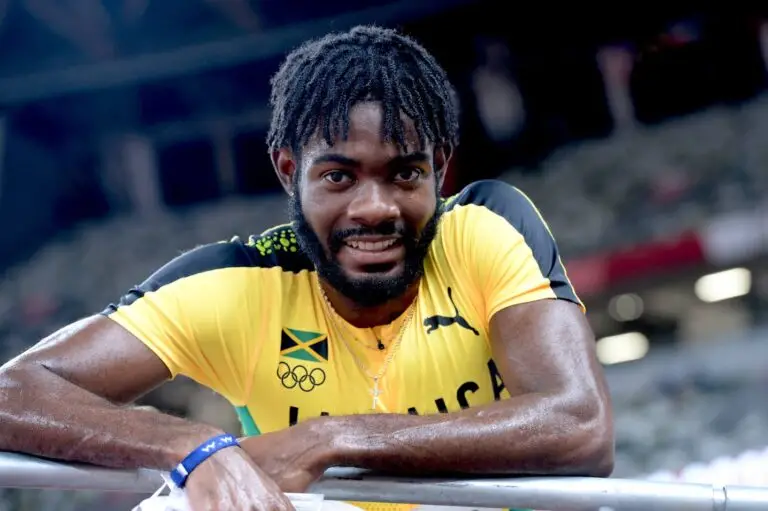

TOKYO, Japan — Christopher Taylor is no longer the boy wonder of Jamaican sprinting. The medals once forecasted, the labels of “next great quarter-miler” — those belong to a younger version of him. What steps onto the track in Tokyo this week is something else entirely: an athlete hardened by absence, defined by an uncomfortable truth — three lost years are not simply erased by lacing spikes again.
Taylor’s story doesn’t unfold like a comeback movie. It isn’t redemption, nor revenge. Instead, it’s about recalibration. After a 30-month ban stripped away momentum, stripped away certainty, he has had to re-engineer himself not only as a runner but as a competitor in a sport that moved on without him.
“Running the 200 feels almost alien,” he admitted in the days leading into the World Championships. “The bend doesn’t forgive. The timing doesn’t forgive. You start over, and you feel it in every stride.”
At 25, Taylor has re-entered not as a star-in-waiting but as a craftsman relearning his tools. The discipline once instinctive now demands conscious effort — adjusting drive phases, correcting mechanics on the curve, rediscovering rhythm on the straightaway. Each heat is less about opponents and more about memory.
He does not cloak this in dramatics. “I’ve always known I’m strong enough,” he says. “The past years only confirmed that. I put in the work, and now I’m back where I should be.”
For Jamaica, his return is not the resurrection of a prodigy but the arrival of a different kind of competitor — one tested not just in stopwatch terms but in the long silence of being sidelined. His presence on the Tokyo track is not about chasing ghosts of what might have been. It’s about inventing what comes next.
When the gun fires on September 17, Taylor’s performance may not be measured only in times or medals. For him, the truest mark is simpler: that after years of enforced stillness, he is running again.