
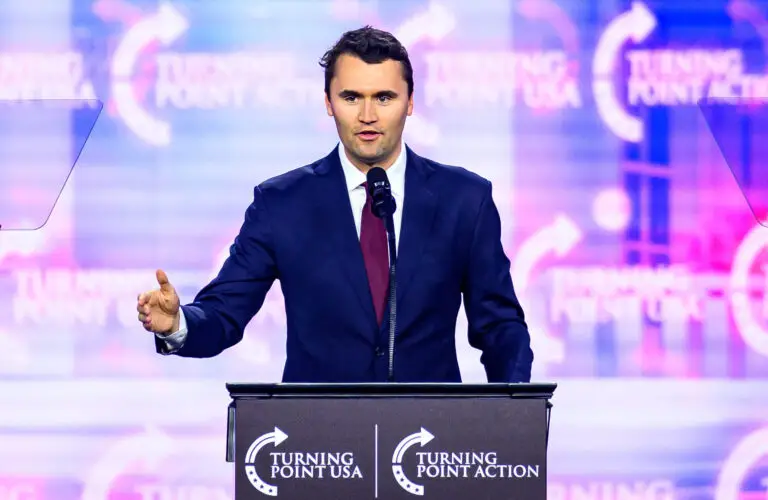

The shooting death of Charlie Kirk in Utah this week did not just end the life of a conservative provocateur; it ruptured the fragile membrane of American political discourse. For decades, America’s ideological battles have been waged on airwaves, podiums, and screens. On Wednesday night, they spilled back into blood.
From Rhetoric to Gunfire
The setting was a university auditorium — a place historically reserved for debate, disagreement, and the sparring of ideas. Instead, it became a crime scene. A single bullet ended Kirk’s address, silenced the crowd, and reignited a national debate over how far the nation has drifted toward violence as a political language.
Observers noted the symbolism: the attack occurred while Kirk was answering a question about extremist shooters. Within seconds, theory became reality.
A Mirror to the Nation
Kirk’s career embodied the sharpening edge of America’s culture wars. He was adored by his followers as a fearless defender of faith, firearms, and national identity, and reviled by critics as a manipulator of outrage. His influence was not confined to rallies or cable networks; it lived on TikTok feeds, Instagram clips, and podcasts reaching millions.
Now, his death has become an indictment of the political climate itself. Students at the event spoke less about Kirk than about their own fear: fear of speaking openly, fear of choosing public life, fear of becoming targets in an increasingly hostile national theater.
Leaders Respond, But Fractures Remain
Within hours, President Donald Trump described the killing as “a dark moment for America.” Republican leaders framed it as proof of targeted persecution, while Democrats — including Joe Biden and Gavin Newsom — condemned the act but urged restraint.
The political establishment seemed unified in grief, yet divided in interpretation. Was this a lone act of madness? Or was it the inevitable result of years of rhetoric that blurred the line between disagreement and dehumanization?
A Dangerous Precedent
History is not short on moments like this. The deaths of public figures — from Lincoln to Kennedy to Giffords’ near-fatal shooting — reveal a pattern: political violence never stays contained. It reverberates, shapes movements, and redefines eras.
For many, Kirk’s assassination is not about one man but about the trajectory of the republic. If bullets replace arguments, what becomes of the public square? If college stages become battlegrounds, where can the next generation of leaders safely stand?
The Silence After
As Utah Valley University reopened its campus with heightened security, the community wrestled with the symbolism of an empty chair on stage and an abruptly silenced microphone.
For Kirk’s followers, his death is martyrdom. For his critics, it is a warning that their own icons may not be safe either. For the nation, it is a moment of reckoning: the line between debate and death has never been thinner.