

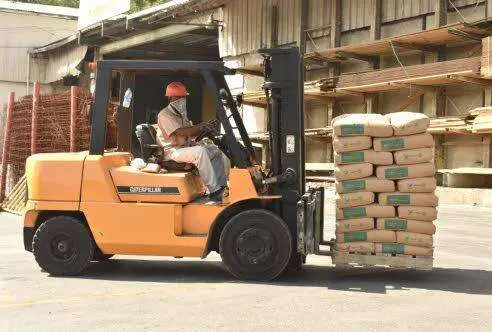

Caribbean Cement Company Limited (CCC) is currently under scrutiny due to a significant shortage of cement, which has impacted various sectors within the multibillion-dollar construction industry. The shortage has led to project delays, rationing by hardware stores, and a scramble among contractors and other stakeholders to secure the essential material.
Rationing and Market Impact
The shortage has become so severe that some hardware stores are imposing limits on purchases. For instance, a hardware store in St. Andrew has restricted customers to just 10 bags of cement per transaction. This rationing reflects the widespread frustration among those relying on cement for ongoing projects. To keep their projects on track, some individuals have resorted to unconventional methods to obtain cement.
In a statement, CCC acknowledged the issue, attributing it to the recent completion of its annual kiln maintenance and the impact of Hurricane Beryl. The company explained that its initial inventories were depleted faster than anticipated due to relief efforts following the hurricane.
Expansion and Production Challenges
As Jamaica’s sole cement manufacturer, CCC is working on a significant US$40-million expansion project aimed at increasing production capacity by 30% by 2025. Despite a substantial increase in cement production from 758,800 tonnes in 2019 to 962,600 tonnes in 2023, the company has faced difficulties in meeting current demand.
When approached for further comment, CCC stated that it is striving to return to normal production levels as swiftly as possible. The company emphasized its commitment to replenishing inventories and apologized for the inconvenience caused to its customers.
Industry Reactions
The shortage has prompted reactions from various industry leaders. Chris Bicknell, chairman and CEO of Tank-Weld Group, confirmed the cement shortage and acknowledged the complaints from affected parties. Norman Horne, executive chairman of Arc Manufacturing Limited, highlighted the cascading effects of the shortage, noting that it impacts not only construction but also hardware sales and worker employment.
Adam Hugh, CEO of Island Concrete Company Limited (ICCL), expressed concerns about the shortage’s impact on his operations. As a premium supplier of ready-mixed concrete, ICCL has had to seek alternative sources and adapt its methods to manage the shortage.
Calls for Government Intervention
The People’s National Party (PNP) has called on the Jamaican Government to address the cement shortage urgently. Anthony Hylton, Opposition spokesperson on investment, industry, and global logistics, urged the Government and CCC to find immediate solutions to the supply issues affecting the construction industry and its over 150,000 workers.
Market Protection and Import Regulations
The current market protection measures have come under scrutiny. A 15-40% tariff on imported cement and strict import permits limit competition. Aside from CCC, only Buying House Cement Limited (BHC) is authorized to import cement, with a cap of 120,000 tonnes annually. WT Limited, granted an import permit in October 2021 for 50,000 tonnes of Ordinary Portland Cement from Türkiye, has not provided recent updates.
Deanall Barnes, managing director of Atlantic Hardware & Plumbing Company Limited, has suggested the need for a third importer to prevent market disruptions during CCC’s shutdowns. Barnes proposed that a 60,000-tonne import permit could provide sufficient market protection and ensure consistent supply.
Historical Context and Financials
The Jamaican Government previously reduced import duties in March 2006 to address a similar issue when CCC faced production cuts due to quality control problems. Despite recent challenges, CCC’s financial performance has shown resilience. The company’s revenue increased by 7% to $15.28 billion, with operating profit rising 68% to $6.04 billion. Net profit also grew by 75% to $4.28 billion.
CCC’s asset base expanded by 20% to $39.60 billion, with significant cash reserves. However, its stock price remains below its October 2021 highs, reflecting market uncertainties. Cemex SAB de CV, which owns 79.04% of CCC, and Trinidad Cement Limited (TCL), holding 74.08%, continue to have a significant influence on the company’s operations.
The current shortage and its implications underscore the need for strategic adjustments in the cement supply chain to support Jamaica’s construction industry and economic stability.