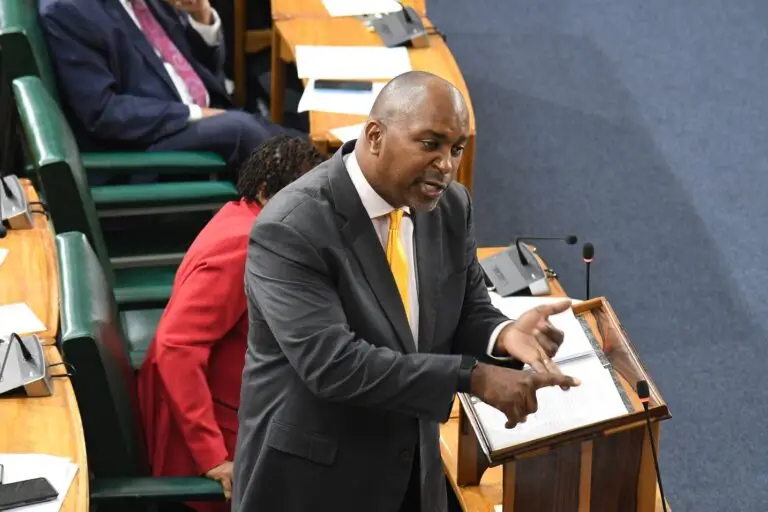

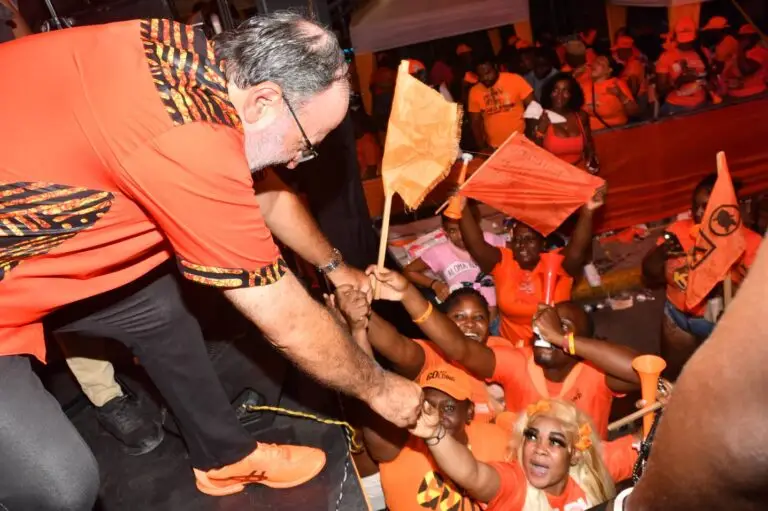

In a fiery display of confidence and defiance, People’s National Party (PNP) President Mark Golding has brushed aside criticisms from Jamaica Labour Party (JLP) officials claiming that the PNP’s newly released manifesto was drafted by artificial intelligence. Addressing an energized crowd at Cross Roads in St. Andrew, Golding made one thing clear: the document is the product of rigorous internal debate, policy refinement, and human intent—not machine learning.
“Our Brain, Our Work”
According to Golding, the development of the manifesto was the result of focused retreats involving the PNP’s Shadow Cabinet, where each spokesperson proposed initiatives aligned with their portfolio responsibilities. Only policies deemed viable and impactful were approved for inclusion. Golding personally oversaw the final edits.
“I went through the entire manifesto myself to ensure it was a true reflection of our party’s values,” he stated. “It’s not artificial intelligence. It’s authentic, deliberative leadership. We’re dealing with real people and real problems—not bots.”
JLP’s Critique Met With Irony
The accusations from the JLP—framed during a press conference that took aim at the manifesto’s originality, accuracy, and authorship—were met with laughter and rejection by Golding’s supporters. The JLP team had labeled the document a poorly executed, AI-generated imitation riddled with spelling errors and derivative ideas.
Golding responded sharply: “They still haven’t released a manifesto of their own, but they’re holding press conferences about ours. That alone tells you who’s doing the real thinking.”
Housing and Ownership at the Forefront
Golding didn’t stop at rebuttals. He used the platform to reaffirm the PNP’s pledges, placing strong emphasis on homeownership, housing reform, and youth opportunity.
Among the key initiatives outlined:
- Construction of 50,000 affordable homes on unused public land.
- Reform of the National Housing Trust (NHT) to return it to its original mission of supporting working-class Jamaicans.
- A $500,000 grant to help first-time homeowners with deposits.
- A $1-billion annual fund dedicated to helping young contributors under 45 secure homes.
- Rent-to-own housing options and legal reforms to shorten the timeline for land acquisition by long-term informal occupiers.
“These aren’t gimmicks. They’re engineered solutions to long-standing problems,” Golding declared. “Jamaicans won’t be spectators in their own country. They’ll be owners.”
Social Inclusion Promises
The manifesto also commits to:
- Launching a $1-billion Disability Fund.
- Upgrading informal settlements under the revived Portia Plan.
- Completing unfinished infrastructure across the country’s Operation PRIDE housing developments.
Cultural Anchoring, Political Messaging
In a nod to party legacy, Golding invoked lyrics from “My Leader Born Yah,” a political anthem that has echoed through PNP campaigns for decades. He adapted the lyrics to modern relevance, linking past promises of education reform to future commitments like scholarships for first-generation university students.
“The spirit of change is rooted in our DNA,” Golding declared. “Michael Manley’s vision isn’t behind us—it’s the foundation we’re standing on.”
Closing Shot
In his final moments on stage, Golding reframed the AI accusation into a rallying cry. “They say our vision was created by robots. I say it’s powered by resolve,” he said. “This is not artificial. This is Jamaica—real people, real dreams, and a real plan.”
With a mix of sharp wit, political grounding, and crowd-charged energy, Golding delivered not just a defense of the PNP’s manifesto, but a strategic message: the party is not hiding behind algorithms. It’s standing in front of the nation with a human-driven roadmap for transformation.