
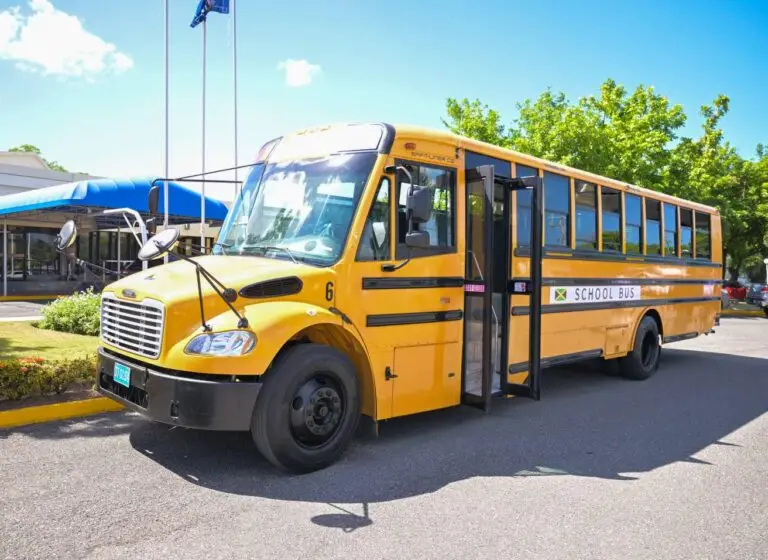

KINGSTON, Jamaica — The Ministry of Transport is accelerating preparations for its ambitious Rural School Bus Programme, with operational testing now actively underway across multiple parishes. As of this week, more than 60 routes are in the evaluation phase, bringing the initiative closer to readiness ahead of the September 2025 academic year.
Wheels on the Ground, Data in Hand
Teams have begun dry runs to simulate actual school-day conditions, assessing journey times, fuel efficiency, passenger capacity, and road suitability. Each route is being reviewed for logistical viability and optimized scheduling. Testing began in central and western regions and has now expanded to eastern and southern corridors.
Fit for Purpose? Not Quite Yet.
Initial runs have exposed one notable issue: tyre durability. The current tyres, though functional, are showing signs of rapid wear under rural terrain. In response, the Ministry has secured a shipment of upgraded tyres engineered specifically for uneven and high-friction surfaces common to Jamaica’s secondary roads. Installation is scheduled to be completed before the programme officially launches.
Tailored Transport, Not One-Size-Fits-All
The Ministry has acquired a fleet of varying bus sizes to address the distinct needs of each community. Testing results will inform final vehicle allocations, ensuring that narrow roadways or low-density areas are served by smaller units, while high-demand zones receive larger-capacity vehicles.
Public Assurance Amid Scrutiny
Transport Minister Daryl Vaz has confirmed that insights from each day of testing are being compiled into the master deployment plan. Amid a flurry of speculation online, the Minister called for restraint, urging citizens to await verified briefings through official communication channels.
Next Steps
With over half of the route network now assessed, remaining locations are scheduled for review over the next few weeks. All feedback—from drivers, engineers, and community members—is being consolidated to refine the final roll-out.
This marks a critical phase in the Government’s broader education access strategy, aiming not only to modernize school transport but to reduce absenteeism in underserved rural areas.