
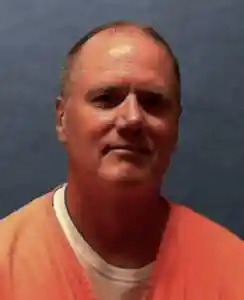

In the quiet town of Raiford, Florida, a man who had once worn the uniform of the U.S. Air Force was put to death on Thursday—three decades after committing one of the most harrowing acts of domestic violence in the state’s history.
Edward Zakrzewski, now 60, died by lethal injection, a sterile conclusion to a story soaked in rage, betrayal, and blood. In 1994, he murdered his wife and two children after discovering his marriage was unraveling. It wasn’t a crime of passion—it was a premeditated eradication of a family.
What followed was a flight to Hawaii, a new identity, and the illusion of a second life. That too collapsed when an episode of Unsolved Mysteries brought his face back into the light. Within months, he was in handcuffs.
For years, his case lingered in the legal system, debated, appealed, and reviewed until it reached the threshold of finality this week. The U.S. Supreme Court’s denial of his appeal was the last stop.
Zakrzewski’s final words offered no remorse, only sarcasm. He praised the efficiency of the state’s execution process. There were no tears.
This year, the United States has carried out 27 executions—matching the country’s highest annual rate in a decade. Florida alone has conducted a third of them. Despite a shifting national sentiment and growing international condemnation—especially over new methods like nitrogen hypoxia—several states, Florida foremost among them, continue to carry out death sentences with steady resolve.
While some view the event as overdue justice, others see it as the latest cycle in a system that rarely heals, only concludes. For the victims, there are no headlines, no final words—only silence that began in 1994.
The machinery continues.