

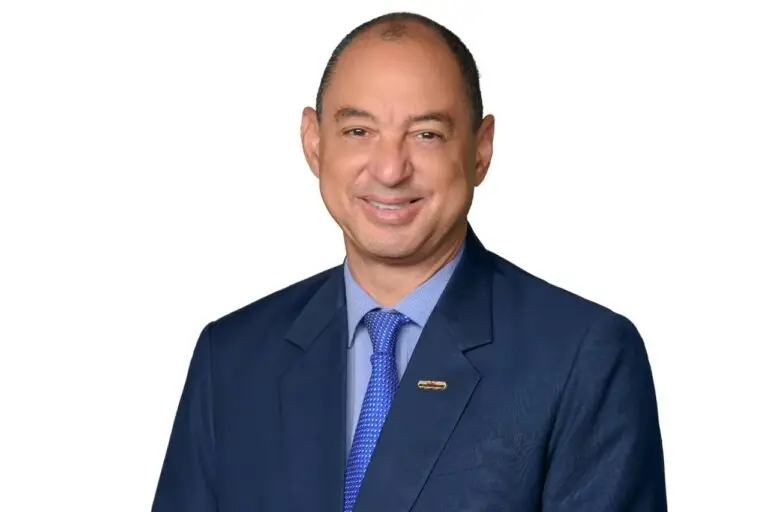

From the boardroom of GraceKennedy to the benches of the Senate, Donald G. Wehby reshaped the contours of Jamaican enterprise and public policy alike. The celebrated business titan died Saturday, July 26, at the Tony Thwaites Wing of the University Hospital of the West Indies, closing a 62-year journey marked by disciplined growth, exacting standards, and an unmistakable devotion to national development.
Corporate Jamaica reacted first—and loudest. GraceKennedy hailed its retired Group CEO as “a remarkable leader who embodied selfless service and unwavering integrity,” crediting him for converting the century-old trading house into a diversified, globally recognised conglomerate without diluting its social contract at home. The Private Sector Organisation of Jamaica, where Wehby once steered finance and strategy, called his loss “the departure of a titan whose fingerprints are etched into every major reform the PSOJ has advanced in the last two decades.”
Tributes quickly crossed partisan lines. Prime Minister Andrew Holness praised Wehby’s “light of excellence” that illuminated commerce, sport, and policymaking; Opposition Leader Mark Golding echoed the sentiment, depicting him as a “north star” for principled leadership. Even the Jamaica Labour Party—where Wehby never sought elected office—described him as “a corporate luminary and philanthropist whose reach extended far beyond any balance sheet.”
That reach included sport. His sponsorship of the ISSA/GraceKennedy Boys’ and Girls’ Championships re-engineered youth athletics, while Olympic icon Shelly-Ann Fraser-Pryce credits him for board-level mentorship that sharpened her off-track ventures. “He competed in commerce the way we compete on the track—eyes fixed on excellence, never on applause,” she said.
Wehby’s résumé reads like an instruction manual for nation-building: chartered accountant at 22, GraceKennedy CFO by 38, Group CEO by 48, two stints in the Senate, and a seat at the Cabinet table as Minister without Portfolio in Finance. Yet colleagues remember him less for the titles than for the phone calls at dawn, the handwritten margin notes, the insistence that every quarterly report tell a human story. That combination of precision and empathy now defines the benchmark he set—and the void he leaves.
Jamaica will stage official rites in the coming days. Until then, the consensus is clear: Don Wehby didn’t just run a company; he ran a master-class in how private ambition can be welded to public purpose. The case study is over, but the footnotes—thousands of careers launched, scholarships funded, export markets cracked open—will keep writing themselves for years to come.