
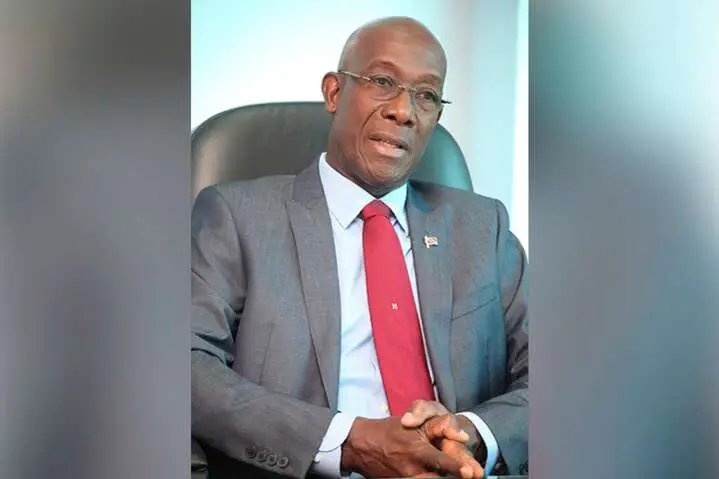

ANTIGUA & BARBUDA — What began as a quiet journey to celebrate scientific progress ended in confusion and controversy for Trinidad and Tobago’s former Prime Minister, Dr. Keith Rowley, after an unexpected detainment in Antigua triggered by an INTERPOL alert.
Rowley, a geologist by training, had been en route to Montserrat to attend the 30th anniversary of its Volcano Observatory — a professional engagement he described as “deeply personal.” But upon landing for a routine stopover in Antigua, immigration officials flagged his name for secondary screening. The reason? An active entry on an international police watch list.
“I was stunned,” Rowley later recounted. “No explanation. No prior warning. Just a cold declaration that my name was on an INTERPOL database.”
What followed was a cascade of accusations — not from law enforcement, but from Rowley himself. He claimed the alert was not an accident but a calculated maneuver by state actors in Trinidad and Tobago aimed at publicly discrediting him post-retirement.
Without naming individuals, Rowley described the move as “weaponized bureaucracy,” and insinuated that institutions were being quietly co-opted to settle political scores.
“The people of Trinidad and Tobago must ask themselves,” he said, “if this level of institutional manipulation is the new normal. Because today it’s me — tomorrow it’s anyone who speaks out.”
No charges have been laid, and there is no public record of any investigation linked to Rowley in any jurisdiction. Still, the former leader is demanding a public response from both the national police commissioner and Prime Minister Kamla Persad Bissessar, questioning whether their offices were complicit — or worse, directive — in the listing.
For now, the mystery remains: how did one of the region’s most recognizable political figures end up flagged by INTERPOL, and why?
Silence from Port of Spain only deepens the shadow.