

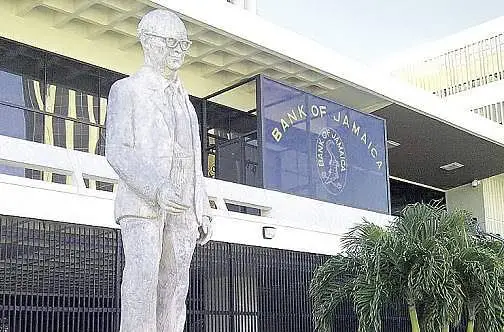

Jamaica’s banking sector just received its latest report card from the Bank of Jamaica, and the grade isn’t flattering. Pre-tax profits for deposit-taking institutions (DTIs) sank almost one-fifth to J$42.2 billion in 2024, the sharpest earnings slip since the pandemic years. The culprit? A brutal pincer movement: deposit costs kept climbing while investment income spiralled lower, leaving net interest margins gasping for air.
Funding is still expensive even after rate cuts.
Last year’s liquidity crunch forced lenders into a bidding war for household deposits, locking in costly term money just as the BOJ pivoted from tightening to easing. By the time policy rates inched down, balance-sheet funding was already repriced at stubbornly high coupons—exactly the opposite of how bankers like the curve to bend.
Trading desks ran out of runway.
To limit duration risk, many DTIs dumped their foreign-currency GOJ global bonds and piled into short-dated repos. That safety shuffle cost them dearly: non-interest income cratered 54 per cent, wiping out the dividend flows and mark-to-market gains that usually smooth earnings. Think of it as parking your sports car in first gear—risk is lower, speed is gone.
Consumers, not companies, drove the loan book—and the stress.
Loans still grew 5.7 per cent, propelled by an 18 per cent surge in mortgages, but past-due retail balances nudged higher. High interest charges, plus Hurricane Beryl’s food-price after-shock, squeezed household cashflow, bringing the consumer delinquency ratio to its worst level in three years. With 55.6 per cent of the system’s loan exposure now sitting on family dining tables rather than corporate balance sheets, the concentration risk is clear.
Capital is plentiful—soon it must be even more plentiful.
Stress tests suggest DTIs can still eat hefty mark-to-market losses and stay above a 13 per cent capital-adequacy ratio. But the new Systemic Risk Buffer rolls out next year, adding up to 2.5 percentage points of extra capital for the biggest players. Every additional basis point parked in equity is one less that can be lent or paid in dividends, so eyes are already on cost-of-capital maths for 2025.
Two new headaches: cyber attacks and climate events.
Online-banking fraud incidents are nine times higher than pre-COVID levels, forcing boards to sign off on costly defensive tech. Meanwhile, Beryl’s J$32 billion damage bill—1.1 per cent of GDP—reminded everyone that climate stress is no longer a footnote in the risk register. Expect full-blown climate stress tests to be standard by the time next year’s stability report lands.
A resolution playbook—just in case.
Parliament’s draft Special Resolution Regime introduces bail-in powers that shift failure losses from taxpayers to shareholders and bondholders. No one expects to use the playbook soon, but regulators clearly want it laminated and ready.
What to watch in 2025:
- Can banks push loan yields up without throttling demand in an economy where household debt already equals 26 per cent of GDP?
- Will non-interest income stages a comeback if bond markets stabilise?
- How quickly do boards rebuild profit buffers to cover the incoming Systemic Risk Buffer and surging cyber-security budgets?
Margins have been the silent hero of Jamaican banking for a decade; 2024 proved how quickly that hero can vanish. The next twelve months will reveal whether the sector can reinvent its revenue mix—or whether the spread stays thin and the pressure stays on.