

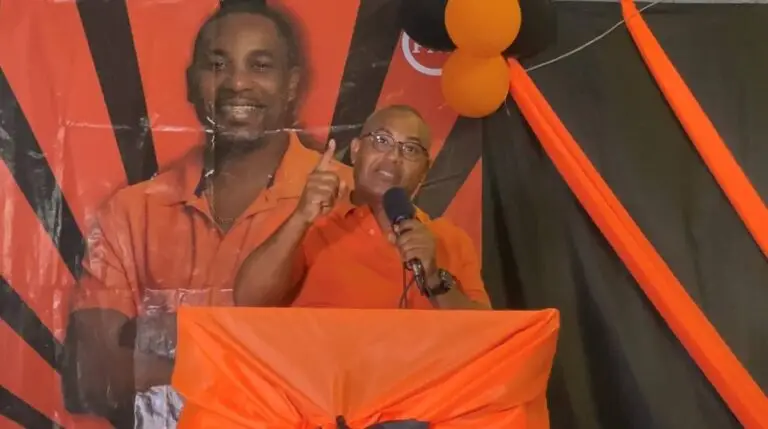

KINGSTON, Jamaica — The simmering dispute over how best to ferry Jamaica’s students has boiled over, with Opposition transport spokesman Mikael Phillips daring the administration to a head-to-head, nationally broadcast debate on the entire future of public transit.
Addressing party faithful in Mandeville on Sunday evening, the Manchester North Western Member of Parliament rejected the notion that his party is anti-school-bus. “Safety is non-negotiable,” he said, “but efficiency is too.” His real quarrel, he declared, lies in “the strategy, the spreadsheet, and the suitability” of the Government’s chosen vehicles.
Phillips contends that the current plan—centred on buying a fleet of large, Government-owned coaches—is a costly mismatch for Jamaica’s often-challenging road network and for the Jamaica Urban Transit Company’s already wobbly balance sheet. “You’re talking about importing problems on four wheels,” he quipped.
Instead, the Opposition blueprint seeks to mobilise what Phillips calls Jamaica’s “rolling middle class”—the thousands of licensed, smaller transport operators already plying the roads. Under the PNP proposal, government money would finance fleet upgrades, moving a Voxy owner up to a 30-seater and a 30-seater owner up to true coach capacity. The result, Phillips argued, is a bigger daily seat count—20,000 versus the Government’s stated 4,000—without drowning the budget in depreciation and maintenance.
There is also a social dimension. “Every retrofitted bus keeps a breadwinner in business, every successful operator keeps a mortgage safe,” he said, sketching a supply-chain vision in which tyre shops, mechanics, insurers, and fuel vendors all benefit from a decentralised model. The party intends to introduce a sliding-scale subsidy for families who miss PATH eligibility by a hair yet still struggle with transport costs—a gesture Phillips says will “plug the fairness gap.”
Education Minister Dana Morris Dixon has dismissed Opposition criticism as “baseless chatter,” maintaining that the rural bus roll-out is on budget and on time. Phillips, for his part, insists the figures do not pencil out. “We’re staring at a fiscal iceberg,” he warned, “and ignoring the radar.”
Whether the Government accepts the debate invitation remains to be seen. But as the new school year approaches, one fact is clear: Jamaica’s grand experiment in student transport has become the newest front in the island’s ever-lively political contest—one that pits a top-down fleet strategy against a grassroots upgrade revolution, with thousands of daily commutes hanging in the balance.