

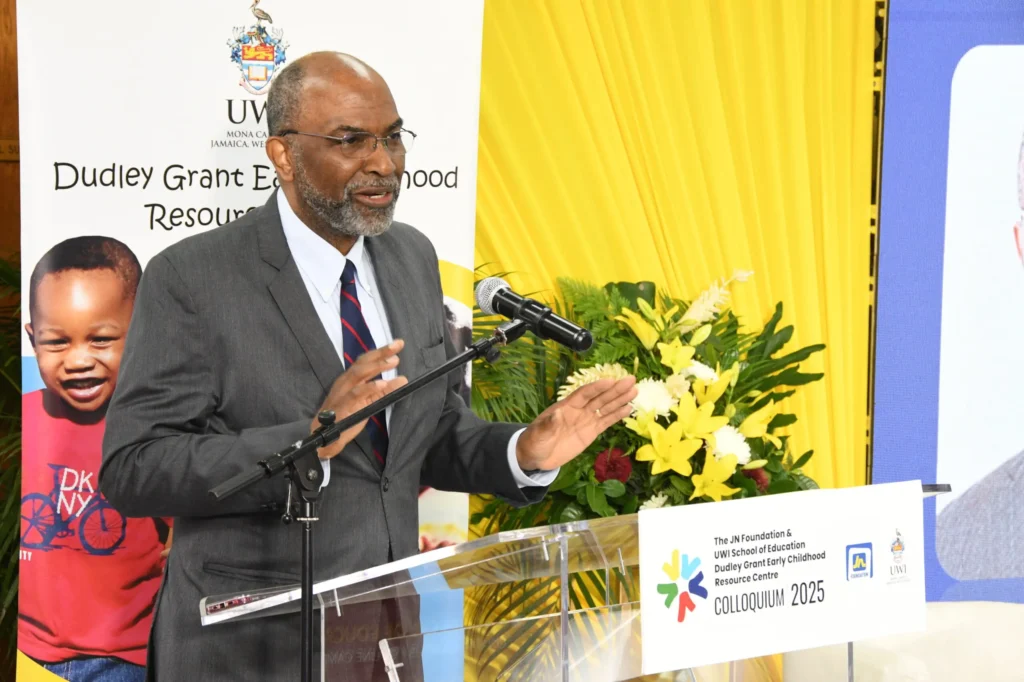

Jamaica’s educational and developmental future hinges on the strength of its youngest citizens — and national leaders are responding with a renewed call to action. A recent high-level gathering of educators, policymakers, and sector stakeholders signals a strategic shift in how early childhood education is approached, protected, and prioritized.
The conversation has moved beyond traditional curriculum and learning tools. Jamaica is now wrestling with how to fortify early childhood institutions against a complex web of threats: natural disasters, socio-economic instability, and a lack of foundational investment.
From Policy to Preparedness
A major focus is now being placed on resilience — not only in children, but in the systems built to support them. As part of the Ministry of Education’s forward-looking agenda, reforms are underway to embed disaster-readiness within the DNA of early childhood education. This includes updated infrastructure protocols, integration of risk-reduction content in teacher training, and permanent curriculum changes that prepare educators to respond to future crises without disruption.
The initiative follows devastating losses at several schools during Hurricane Melissa, where entire computer labs and learning environments were rendered unusable. The ministry’s approach is no longer reactive. As one official noted, “The storm was a lesson. The rebuild must be a blueprint.”
Honouring the Legacy, Evolving the Mission
At the heart of this national conversation is the enduring influence of Dudley Grant, whose pioneering work in the early childhood space continues to inspire today’s educators. His philosophy of using simple, accessible materials to stimulate learning — often referred to as “trashables to teachables” — was more than a teaching tool; it was a model of resourcefulness rooted in Jamaica’s socio-economic reality.
While Grant’s legacy is firmly rooted in innovation and inclusion, today’s thinkers are expanding his mission to include not just pedagogy, but infrastructure, policy, and inter-ministerial coordination.
Reframing Education as Economic Infrastructure
Beyond child development, leaders are sounding the alarm that early education is not a social luxury — it’s economic infrastructure. According to analysts at the colloquium, investments made before age five have the highest potential to yield long-term returns across health, literacy, productivity, and national capacity.
Speakers urged private sector players to see early childhood not as charity, but as pipeline development for the country’s future workforce and leadership. As one participant put it, “A nation that does not shield its seedlings cannot hope for a harvest.”
Toward a New Social Compact
The event ended with a consensus: Jamaica’s next three decades of growth depend on what it does in the next three years for its youngest children. Stakeholders across government, civil society, and private enterprise are being called into a new kind of alliance — one where classrooms are not just spaces of learning but fortresses of national development.
With climate volatility, economic fragility, and demographic shifts looming, early childhood institutions are being reimagined not only as learning centers — but as Jamaica’s first line of defence and first frontier of hope.