

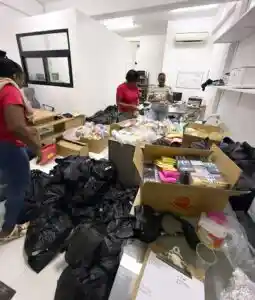

The emotional calm after Hurricane Melissa has done little to ease the financial storm faced by many Jamaicans in the eastern region. While the physical infrastructure may have been spared, the economic aftershocks have placed a weighty burden on individuals and small businesses who unexpectedly found themselves on the front lines of humanitarian relief.
Unlike their western counterparts grappling with physical destruction, many in the east have been financially drained supporting family, friends, and communities devastated by the storm. The response, though noble, has created a cascading economic toll—widening the gap between recovery efforts and fiscal stability.
Across the parishes, stories of personal sacrifice abound. Individuals emptied savings, maxed out credit cards, and halted business operations to fund emergency relief. While not all were directly impacted by wind or flood, many have suffered through indirect consequences—lost income, deferred business expansion plans, and mounting personal debt.
Entrepreneurs like Nicolette Richardson, who runs Growth Consulting, stepped into the breach when institutional support lagged. “We didn’t have a choice,” she shared. “It wasn’t about profit, it was about people.” Her sentiments were echoed by other business owners who absorbed the costs of temporary closures, payroll continuity, and community aid without hesitation.
The operational freeze, however, has forced difficult decisions. Many small businesses have pressed pause on their growth strategies and are now reevaluating how to stay afloat through the Christmas season. “Cash flow’s always been tight. Now it’s critical,” said Carolyn Rose, who operates Liberton, a small enterprise already walking a financial tightrope before the hurricane’s fallout.
At the community level, many entrepreneurs say they feel an unspoken obligation to lead during crises. For some, like project manager and seafood vendor Nastassia Brown, that leadership has translated into sleepless nights—coordinating relief efforts by day, balancing spreadsheets and strained budgets by night.
Brown, who operates Kingston’s Catch at Summit Food Village, saw her operations halted mid-week as the hurricane made landfall. Each missed event costs her significantly. Still, she presses on, cautiously managing resources while continuing to support both staff and storm survivors. “This season, we’re focused on meaning—on what we still have, not what we’ve lost,” she said. “But the financial stress is real.”
With many private citizens acting as first responders, formal support systems are now being urged to step in. The Small Business Association of Jamaica (SBAJ) and the Young Entrepreneurs Association (YEA) have both issued calls for urgent intervention—ranging from tax relief to special loan schemes targeted at micro, small, and medium enterprises (MSMEs).
One such proposal includes an Emergency MSME Stabilisation Fund, designed to deploy low-interest loans or hybrid grants to businesses that either suffered direct losses or redirected operations to assist in the national recovery effort. Other recommendations include temporary tax write-offs for donated goods and services and the removal of GCT on essential rebuilding materials.
On November 4, Prime Minister Andrew Holness addressed Parliament, noting that a national recovery programme is being structured to provide cash assistance and concessional financing. Though details remain scant, Holness emphasized that budgeting is underway for what he described as a “stipend”—a modest injection of funds to restart stalled economic activity.
Financial institutions have begun to respond. The National Housing Trust triggered an immediate mortgage moratorium for affected contributors, with several other entities following suit. VM Building Society, Scotiabank, First Heritage Credit Union, and Jamaica National Bank have all launched relief initiatives, including deferred payment options for up to six months in some cases. However, the fine print remains unchanged—interest continues to accrue, meaning today’s breathing room may become tomorrow’s debt burden.
Even microfinance players like Dolla Financial are preparing their own response packages, aimed particularly at western parishes where physical damage was most concentrated. Yet for those in the east—those who gave without losing homes, but not without sacrifice—the support remains murky.
As the Christmas season approaches, many families are quietly resetting expectations. Fewer gifts. More gratitude. Less consumption. More community.
Still, a prevailing sense of unease remains. Shudene Ramsay, CEO of Ramsay’s Professional Services, put it bluntly: “The storm didn’t flood our homes, but it flooded our budgets. We gave until it hurt. Now we wait to see who helps the helpers.”
For thousands of Jamaicans, especially the small business class, the weeks ahead won’t be about festivities—they’ll be about staying solvent, staying hopeful, and salvaging what’s left of a bruised but unbroken economy.