

JAMAICA — Digicel is pushing full throttle in its post-hurricane recovery, with major strides being made to reconnect homes, businesses, and entire communities in the aftermath of Hurricane Melissa’s devastating sweep across the island.
As of this week, Digicel has confirmed that 57% of its mobile sites are operational—covering 80% of its mobile subscriber base—and that nearly 90% of its Fibre-to-the-Home network has been restored. Business customers are also seeing steady progress, with three-quarters of corporate service points now back online.
The western region of Jamaica, one of the worst impacted zones, has seen a swift resurgence in coverage. Digicel has already restored service across wide areas of Manchester, St Elizabeth, Clarendon, and St Ann. In communities like Alligator Pond, Santa Cruz, and Bull Savannah, residents are back online and reconnecting with the outside world.
From Hanover to Portland, the momentum continues. Negril, Hopewell, and Sandy Bay are once again reachable, while remote pockets in Portland and St Thomas have reported successful restoration in places like Dragon Bay and Duckenfield. St Catherine and Kingston have also seen network stabilization in key urban and suburban pockets.
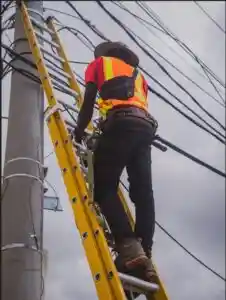
While technical recovery remains the primary objective, Digicel’s response has gone beyond restoring towers and repairing fibre lines. Mobile repair units, known as Digi-Buses, have been deployed to hard-to-reach zones to serve as mobile connectivity hubs. Simultaneously, aerial teams are conducting flyovers to assess damage, map inaccessible regions, and plan safe intervention routes.
Generators continue to power key sites as electrical crews race to restore grid power. Meanwhile, emergency teams have been actively refuelling sites, replacing damaged equipment, and coordinating with national emergency agencies to maintain coverage in fragile areas.
On the humanitarian side, Digicel’s impact is just as visible. Through its foundation arm, over 1,800 relief kits have been distributed in high-need areas. Charging stations and satellite phones have also been dispatched to isolated communities, allowing families to check in with loved ones for the first time in days. In Falmouth, a mother’s first call to her daughter since the storm became a poignant reminder of why this work matters.
Stephen Murad, CEO of Digicel Jamaica, emphasized the company’s single-minded focus on national reconnection. “Every technician, every engineer, every support worker is out in the field with one mission—bring Jamaica back online. That’s the job. And we’re making solid progress.”
Murad acknowledged the terrain challenges in western and central parishes, but noted that repair caravans are steadily working through main arteries from Trelawny to Montego Bay and on to Negril. “We’re rebuilding the network corridor by corridor,” he said.
As restoration deepens, Digicel has urged customers to stay informed via SMS updates, radio advisories, and verified social media channels. The company has pledged transparency throughout the rebuild phase and reaffirmed its commitment to aiding Jamaica’s national recovery.
The message is clear: Digicel is not simply restoring a network—it is helping to restore normalcy.