

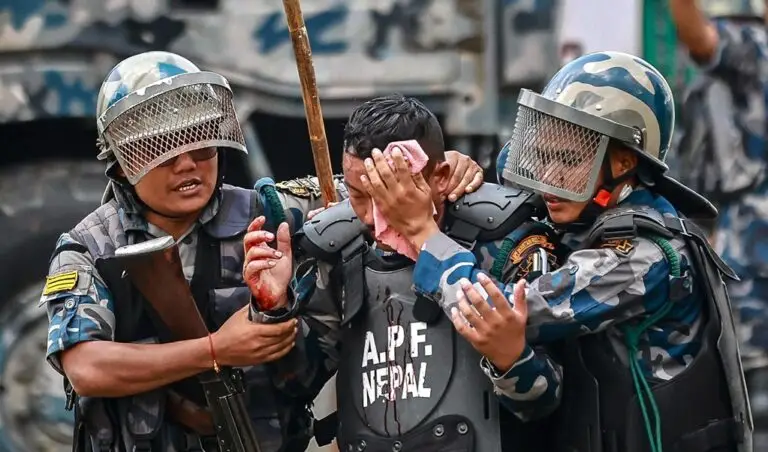

KATHMANDU, NEPAL —
A volatile wave of protest swept across Nepal’s capital yesterday, culminating in the deaths of at least 16 young demonstrators after police forces opened fire during clashes that exposed deep national fractures over censorship and systemic corruption.
The chaos unfolded in the heart of Kathmandu, where thousands of protestors—many of them university students and first-time activists—gathered in defiance of a recent social media ban that abruptly severed access to widely-used platforms like Facebook, Instagram, YouTube, and X. The restrictions, implemented on Friday, marked the government’s attempt to enforce a new regulatory mandate demanding foreign platforms register locally—an order viewed by many as a thinly veiled attempt at digital suppression.
What began as a peaceful mobilization quickly escalated. Protesters marched waving Nepal’s flag and chanting against what they called a “digital gag order,” before breaching barricades placed around government zones. Police forces responded with tear gas, rubber bullets, and baton charges. Eyewitness accounts and disturbing footage suggest live rounds may also have been used.
Hospitals were overwhelmed. Civil Hospital’s corridors became warzones of their own as tear gas seeped through its entrances, choking both victims and medics. “We couldn’t breathe—neither could the patients. It was chaos,” said a staff member at the facility.
Authorities imposed a blanket curfew in the city’s central administrative zones, locking down Singha Durbar (the prime minister’s compound), the presidential residence, and the perimeter around parliament. Yet even under curfew, protests erupted in other districts, suggesting this movement has ignited a deeper national sentiment.
Beneath the fury over digital rights lies a deeper, festering anger—corruption.
“We’re not just here because of TikTok,” said Yujan Rajbhandari, a 24-year-old student protester. “We’re here because corruption has turned our future into a joke.” His comments echo the mood of a disillusioned generation, many of whom have spent the last few years watching high-ranking officials evade accountability while flaunting extravagant lifestyles online.
Videos highlighting the sharp contrast between the wealth of politicians’ families and the struggles of average citizens have gone viral—even as platforms face restriction. One such video, depicting a minister’s daughter shopping in Paris while citizens queued for basic services in Kathmandu, became symbolic of the growing disconnect.
“They think silencing the internet will silence the people,” said Bhumika Bharati, another protester. “But this isn’t just digital. This is generational.”
The government maintains it is acting in accordance with a Supreme Court order requiring social platforms to register and appoint compliance officers. In its official statement, the administration insisted it “respects freedom of expression” while maintaining the need to protect national interests.
Critics aren’t buying it.
“This isn’t governance. It’s fear,” said Ikshama Tumrok, a 20-year-old who joined the protests for the first time. “They’re scared we’ll do what other countries have done—rise up and demand accountability.”
The events mark one of the deadliest internal crackdowns Nepal has seen in recent years and raise unsettling questions about the country’s direction. For now, the streets of Kathmandu remain tense. But if this unrest has made anything clear, it’s this: Nepal’s youth are no longer willing to scroll in silence.


