

In a bold joint initiative, the United States and Panama are pressing for the establishment of a more powerful international force in Haiti, seeking to authorize a 5,550-member unit tasked with dismantling gang control and restoring a semblance of order in the violence-ridden Caribbean nation.
This call to action—delivered to the United Nations Security Council—marks a significant escalation in global concern over Haiti’s worsening security crisis. The proposed resolution would replace the current Kenya-led deployment with a more expansive and operationally aggressive force empowered not just to protect infrastructure, but to actively detain gang members and execute intelligence-led suppression missions.
From Fragile Deployment to Full-Scale Force
What began as a 2,500-troop multinational peacekeeping effort led by Kenya has struggled to gain traction. Despite Kenya’s leadership and the arrival of initial personnel in June 2024, funding shortfalls and coordination gaps have left fewer than 1,000 troops on the ground—woefully insufficient in the face of what many describe as a near-total gang takeover of the capital, Port-au-Prince.
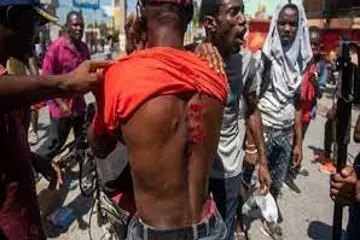
Today, over 90% of Port-au-Prince is under gang control. These groups, empowered and emboldened since the 2021 assassination of President Jovenel Moïse, are no longer content with territorial dominance. Their reach now includes widespread looting, rape, kidnappings, and the disruption of public services across rural Haiti.
A New Doctrine of Deterrence
The joint U.S.-Panama proposal aims to reshape the mission’s scope entirely—transforming it from a largely protective operation into an active counter-gang force with broad authority.
Under the draft resolution:
- The new force would include 5,500 uniformed troops and 50 civilians, funded through voluntary contributions.
- The mission would last an initial 12 months, with powers to arrest and detain Haitian nationals in collaboration with Haiti’s government.
- It would also secure airports, seaports, hospitals, schools, and strategic infrastructure, while assisting in efforts to halt the trafficking of weapons and related contraband.
- The mandate explicitly authorizes targeted, intelligence-led operations aimed at neutralizing gang leaders and dismantling their networks.
This shift in doctrine reflects a growing recognition that the Haitian crisis is no longer containable through defensive posturing. A more offensive stance—fueled by real-time intelligence and supported by the Haitian state—is now viewed as critical to turning the tide.
Political Momentum, Imminent Decision
With the current UN-authorized Kenyan mission’s mandate set to expire on October 2, the Security Council faces mounting pressure to act decisively. A vote on the resolution is expected by the end of the month.
Acting U.S. Ambassador Dorothy Shea has already signaled Washington’s urgency, stating that a scaled-up force is vital to neutralizing gangs that have effectively replaced state authority in many areas of Haiti.
If passed, this resolution could mark the most robust international intervention in Haiti since the MINUSTAH mission, but this time with an unambiguous focus: break the grip of gangs or risk total collapse of the nation’s civil order.
Whether member nations are prepared to contribute the required troops or resources, however, remains an open question—and one that may define the UN’s credibility in responding to modern urban insurgencies.