
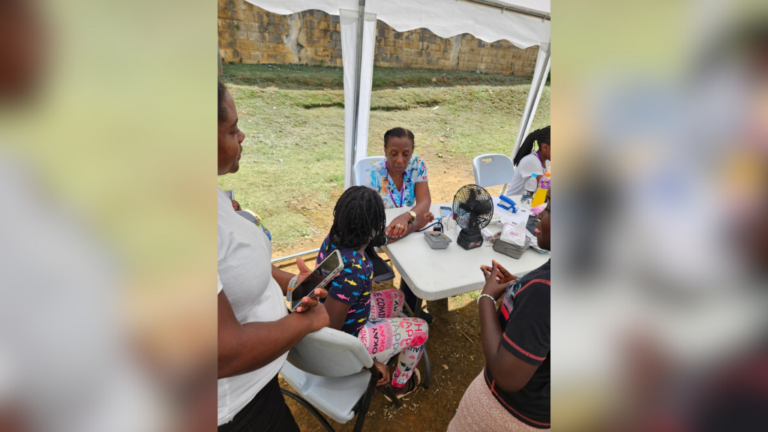

Roses Valley is a village that remembers its people. For three days in August, the primary school yard became more than classrooms and chalkboards — it became a commons where health, dignity, and preparation for the future were given freely.
The gathering was led by Unity Fellowship Jamaica Ministries, an organisation known less for sermons than for its steady hand in building social justice at the village level. This year marked the ninth time they brought doctors, civil servants, and neighbours under one roof to ask a simple question: What does this community need right now?
Answers came in many forms.
A girl left the school gates with new books and braided hair; a boy with sharpened pencils and a fresh trim. Shopkeepers walked home with blood pressure machines tucked under their arms, small tools for a larger mission: to make health part of everyday life, as natural as buying flour or sugar.
Some moments were deeply personal. A 93-year-old woman, stoic and smiling, leaned forward for an eye exam. A former student, now training to be a nurse, slipped on gloves to assist in health checks — her presence a reminder that investment in children often circles back as service to the whole. And when one man refused to leave without being tested, his insistence revealed a crisis hidden in plain sight: dangerously high blood sugar that demanded immediate hospital care. His stubbornness may have saved his life.
Behind it all was a spirit of cooperation.
Government offices showed up not as distant institutions but as neighbours: helping residents register births, file taxes, understand pensions. Private partners added their weight, making the fair not a performance but a partnership.
Reverends Nevin Powell and Clarence Edwards closed the event not with ceremony but with gratitude, noting that the heartbeat of Roses Valley lies not in its challenges but in its ability to gather, adapt, and care for its own.
In villages like this, change doesn’t always arrive with fanfare. Sometimes it comes quietly — through sharpened pencils, borrowed clippers, a machine humming on a shop counter. And when stitched together, those small gestures form something larger: a rural community refusing to be left behind.