

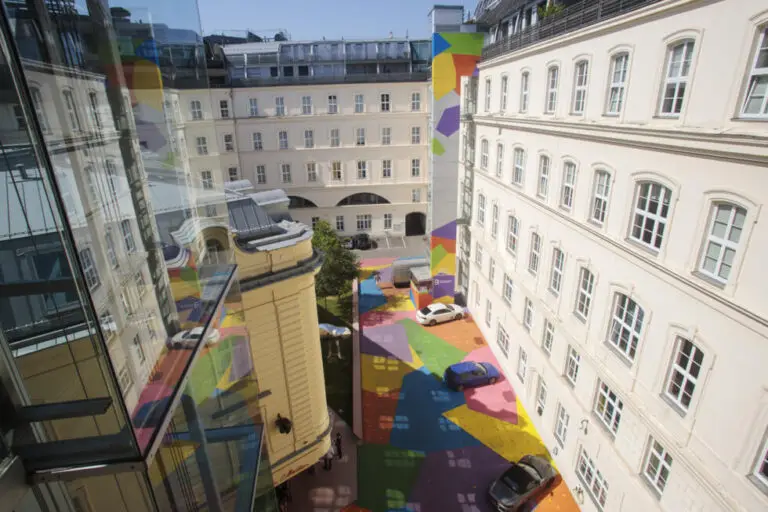

ienna is learning a lesson every modern metropolis will face: concrete remembers heat.
When the sun beats down on black asphalt, the ground becomes a battery—soaking in radiation during the day and releasing it at night. This is why cities don’t cool the way forests do. They trap. They suffocate. And during Europe’s new wave of 40-degree summers, that trap has become lethal.
The response, surprisingly, isn’t coming from engineers with air-conditioning units, but from those willing to redesign the city’s skin. Vienna has begun experimenting with lighter surfaces, reflective paints, and unconventional coverings that interrupt the cycle of absorption. One courtyard saw its surface temperature drop by more than 10 degrees—without a single machine, just by changing the ground’s color and texture.
Behind these experiments is a deeper confrontation: how do we make cities that don’t work against their inhabitants? The problem is not just temperature—it’s infrastructure built for another century. Dark pavements, sealed courtyards, narrow airless streets: all designed without imagining a climate that burns.
Vienna’s shift joins a wider movement. Paris plants vertical gardens. Barcelona reclaims intersections for tree-lined “superblocks.” Athens coats rooftops in reflective white. None of these are miracles, but each is an incision into a failing urban body.
The stakes are not abstract. A cooler courtyard doesn’t just mean comfort for tourists—it lowers surrounding building temperatures, cuts energy demand, and slows the vicious cycle of air-conditioning that heats the very air it’s meant to tame.
Cities sweat because they are covered in black scars of their own making. The first step in healing may be as simple as changing what we choose to walk on.