

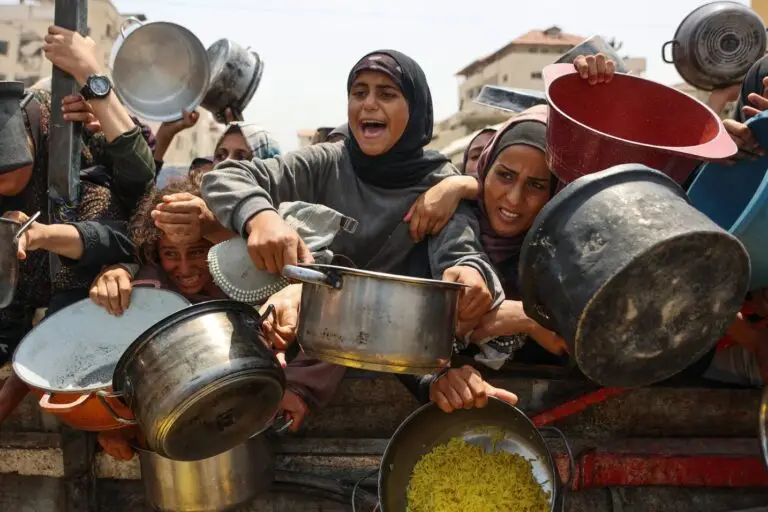

A growing chorus of international voices is accusing Israel of deliberately engineering a humanitarian crisis in the Gaza Strip, reigniting scrutiny over the conduct and consequences of its prolonged military campaign.
In a newly released report, a major global human rights watchdog alleges that the deteriorating conditions in Gaza are not merely collateral damage, but rather the outcome of an intentional strategy. The report outlines a pattern of restricted aid access, infrastructure collapse, and systemic targeting of civilian life — suggesting that deprivation, particularly hunger, is being used as a tool of war.
First-hand accounts from displaced civilians and health workers reveal a bleak reality: children suffering from acute malnutrition, medical supplies exhausted, and food scarcity reaching catastrophic levels. Testimonies paint a picture of daily life that has become indistinguishable from survival — where the struggle is not just against bombs, but against starvation itself.
The watchdog claims these actions are part of a broader plan to dismantle Palestinian society from within, describing a campaign that extends beyond battlefield tactics to what it calls “the systematic erosion of life.” It argues that Gaza’s infrastructure — its hospitals, water systems, and food supply chains — has been so severely compromised that recovery is near-impossible without a total lifting of the blockade.
Israeli authorities have firmly denied the allegations. In official statements and prior briefings, they maintain that aid is not being obstructed and that claims of famine are either exaggerated or manipulated for political ends. Internal agencies have pointed to discrepancies in health data and question the reliability of reports originating from the Hamas-controlled region.
Nevertheless, the international community remains divided. Some governments have called for immediate independent investigations, while others continue to back Israel’s right to self-defense. The debate is now less about whether civilians are suffering — that is widely accepted — and more about whether that suffering is incidental or intentional.
At the heart of this escalating discourse lies a grim ethical question: Is starvation being wielded as a weapon? If so, it could mark one of the most damning accusations of modern warfare — one that redefines the boundaries between military strategy and humanitarian law.
As the conflict drags into its second year, the question remains: How much of Gaza’s suffering is a consequence of war — and how much is its purpose?