

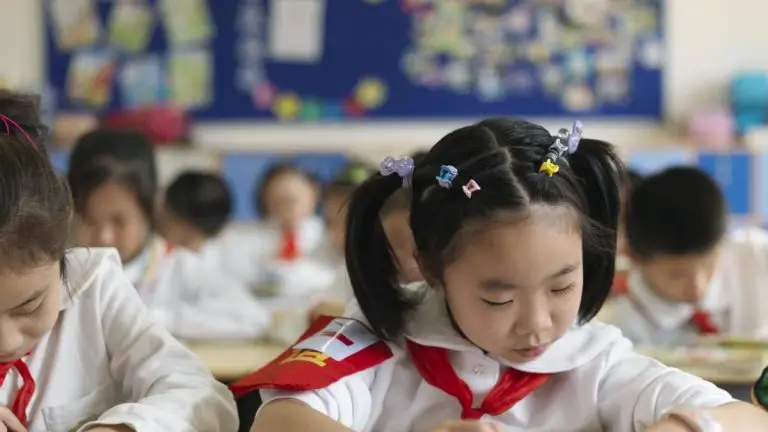

In a decisive policy shift, Chinese authorities have announced that beginning in the autumn of 2025, public pre-primary education will be provided free of charge for all children in their final year before entering formal school.
The move is part of a broader effort to slow the country’s accelerating population decline—one that has left policymakers scrambling for structural fixes after decades of restrictive birth policies and rapid urbanization.
This latest measure follows the recent introduction of annual cash incentives for families with children under three, signaling Beijing’s growing urgency. Once known for its population control regime, the nation is now courting childbirth.
China recorded just 9.54 million births last year, a dramatic drop from the 18 million births logged in 2016. That same year marked the end of the country’s infamous one-child policy, but the reversal has so far failed to reverse the trajectory.
Demographers are raising the alarm. Long-term forecasts show China potentially shrinking to nearly half its current size by the end of the century—down from 1.4 billion to around 800 million. Such a contraction would have sweeping consequences for labor markets, pension systems, and global economic weight.
In 2023, India overtook China as the world’s most populous nation, a symbolic moment underscoring the shift in demographic momentum across Asia.
Despite the policy pivot, deep-rooted barriers remain: high childcare costs, relentless work culture, and a generational ambivalence toward marriage and parenthood continue to shape personal decisions far more than state decrees.
Whether waiving kindergarten fees and offering cash allowances is enough to reignite birth rates remains uncertain. What’s clear is that China’s demographic challenge is no longer tomorrow’s problem. It’s now.