

GEORGETOWN, Guyana — The Caribbean’s top trade officials gathered in Georgetown this week not to celebrate milestones, but to confront a sobering truth: the region’s economic engine is sputtering, and without course correction, the consequences may be far-reaching.
The 60th sitting of the Council for Trade and Economic Development (COTED) opened amid mounting concerns over the region’s external dependencies, internal fragmentation, and an increasingly hostile global trade arena. For many ministers present, the focus was less on ceremonial statements and more on structural redesign.
“We’re at a juncture where patchwork reforms won’t cut it,” remarked one senior official in attendance. “Our trading architecture wasn’t built for this level of volatility.”
A Region Still Dependent
Despite decades of integration rhetoric, Caribbean economies remain tethered to a narrow band of trade partners. The overwhelming reliance on U.S. and European markets—where policy shifts are now swift and unrelenting—has left the bloc exposed. New tariffs, unpredictable sanctions, and shrinking diplomatic leverage have forced the region’s hand.
But the vulnerabilities aren’t just external. Intra-CARICOM trade still accounts for less than 20% of total regional trade—an underperformance blamed on outdated logistics systems, uneven policy enforcement, and competing national interests.
Talk of Transformation, Demand for Action
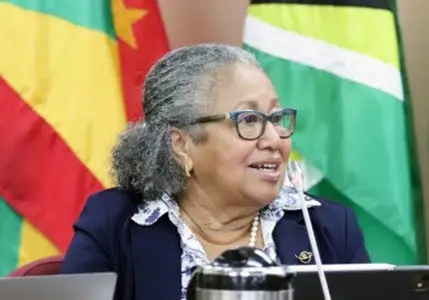
While statements from CARICOM Secretary-General Dr. Carla Barnett emphasized the need for diversification and modernization, there is growing pressure from the private sector and civil society for measurable change, not just declarations.
Among the key matters under discussion:
- Supply Chain Independence: Building capacity for local manufacturing and food production to reduce import dependence.
- Regulatory Harmonization: Fast-tracking a unified trade code and dispute resolution framework across member states.
- Digital Trade Infrastructure: Investing in regional platforms to support e-commerce, customs integration, and real-time trade data.
Notably, there was emphasis on rethinking traditional alliances. Talks are intensifying around engagement with Latin American blocs, African trade zones, and Southeast Asian economies—markets that have been historically underexplored by Caribbean negotiators.
The Institutional Challenge
One recurring theme at the meeting: coordination. The region is saturated with institutions—yet they often operate in parallel, duplicating efforts and draining resources. There is increasing consensus that unless CARICOM’s organs align under a performance-driven model, ambitions will remain stalled.
“We cannot afford to have thirteen different interpretations of a trade protocol,” said one trade envoy. “We need execution, not excuses.”
The Stakes Are National, Not Just Regional
For countries like Guyana, Trinidad, and Barbados—each at different stages of economic transformation—the outcomes of these trade talks will shape domestic policy for years. Whether it’s monetizing energy reserves, expanding manufacturing bases, or leveraging tourism data, access to open, fair, and stable trade corridors is critical.
And in a world where geopolitical alliances are constantly recalibrated, the Caribbean must decide whether it will remain reactive—or finally set its own terms.