

In a country defined by oil riches and political fault lines, the most unexpected presidential hopeful has entered the ring.
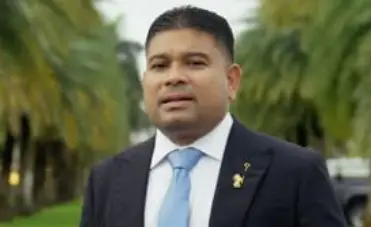
Azruddin Mohamed, a polarizing figure and one of Guyana’s most controversial businessmen, has declared his intention to run for president in the upcoming September 1, 2025 general elections. His announcement, made via social media, stunned many political observers who have long seen Mohamed as a power broker behind the scenes—not someone vying for the country’s highest office.
“I’m stepping forward,” he said in the video, “not as a politician, but as a citizen who believes Guyana can be more.”
Mohamed’s declaration comes less than a year after being sanctioned by the United States Treasury, which accused him, his father Nazar, and their company Mohamed’s Enterprise, of large-scale corruption tied to Guyana’s gold exports. The allegations included manipulating export data to evade more than US$50 million in taxes and operating shell entities to shield illicit financial flows.
Despite the sanctions, Mohamed’s public profile has only grown. His well-funded charity drives, flashy sponsorships—including a renowned racing team—and persistent media presence have built him a loyal following, particularly among young, disenfranchised voters.
His candidacy, however, is already drawing skepticism.
“How does someone barred from doing business with American entities plan to govern a nation where the U.S. is one of its most significant investors?” asked one Georgetown-based economist, speaking on condition of anonymity. “This isn’t just about ethics—it’s about feasibility.”
Mohamed remains defiant. His video leaned heavily on themes of independence, equality, and national pride—while carefully avoiding direct references to the U.S. allegations. Instead, he spoke of restoring dignity, building trust, and creating “a Guyana that doesn’t kneel to outside interests.”
Though Mohamed has yet to announce a political party or unveil a full manifesto, sources close to his team suggest a slate is in the works, and that the campaign will focus heavily on economic empowerment and regional inclusion.
President Irfaan Ali, who will seek re-election, has not publicly addressed Mohamed’s challenge. The political establishment, both ruling and opposition, is watching closely to see whether the billionaire’s wealth and visibility can translate into votes—or whether the shadow of U.S. sanctions proves too heavy to lift.
In a country now ranked among the world’s fastest-growing economies, the entrance of a sanctioned mogul into presidential politics adds a dramatic new layer to an already high-stakes election.