


In Grenada, the Public Sector Employees (Pension Fund) Bill 2024 has ignited a firestorm of debate, with critics labeling it as a potential affront to constitutional safeguards. The bill, recently passed in the Lower House of Parliament and awaiting deliberation in the Upper House, proposes a contributory pension system for public sector workers. Employees and the government would each contribute three percent of the worker’s salary to the pension fund, managed by a trust.
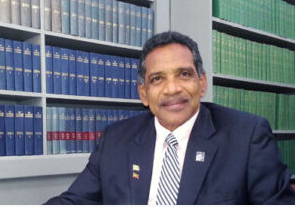
James Bristol, a former attorney general and seasoned legal advocate, has emerged as a prominent critic of the legislation. He argues that the bill undermines entrenched constitutional principles by normalizing indefinite contractual arrangements for public servants holding what are traditionally permanent positions.
“This approach is fundamentally flawed,” said Bristol. “You cannot circumvent constitutional provisions by masking permanent roles as contract positions. It’s a direct challenge to the integrity of the constitution.”
Bristol’s concerns are rooted in historical context. He previously spearheaded the successful legal challenge that declared the 1983 Pension Disqualification Act unconstitutional, a law introduced during Grenada’s revolutionary period under the People’s Revolutionary Government (PRG). The act, deemed invalid in 2022, had long deprived public workers of their pension entitlements.
The current bill, Bristol contends, risks reigniting legal disputes over public employees’ rights. “This legislation strips contract workers of protections guaranteed under the constitution. It’s an unnecessary risk that could lead to prolonged court battles,” he warned.
Proponents of the bill argue it is a step toward modernizing Grenada’s public sector pension system and ensuring sustainability. However, opponents believe it sidesteps critical constitutional protections enshrined in Sections 84 and 92 of the Grenadian Constitution.
Bristol suggests that the government adopt a more inclusive approach, regularizing eligible workers under existing frameworks rather than introducing new complexities. “The financial burden may be significant, but addressing this issue within constitutional boundaries is the only sustainable solution,” he said.
If passed, the Pension Fund Bill will mark a pivotal shift in Grenada’s public sector. However, it remains mired in controversy as both sides await the Upper House’s decision on December 27. Whatever the outcome, the bill underscores the delicate balance between legislative reform and constitutional fidelity in shaping Grenada’s future.