

In a powerful display of frustration, hundreds of workers in Trinidad and Tobago took to the streets Friday evening, braving torrential rain to protest a controversial salary increase awarded to the nation’s political leaders. The demonstration, organized by the Oilfield Workers Trade Union (OWTU), saw strong support from several other unions, including the Communication Workers Union and the Aviation Communication and Allied Workers Union, as they marched towards the Prime Minister’s official residence.
Protestors were furious over the government’s decision to accept the Salaries Review Commission’s (SRC) proposal, which grants politicians a substantial salary increase. The unions have sharply criticized the move, calling it self-serving and out of touch with the reality of ordinary citizens facing mounting financial challenges. The demonstrators are demanding that the report be presented in Parliament to allow for public scrutiny and debate.
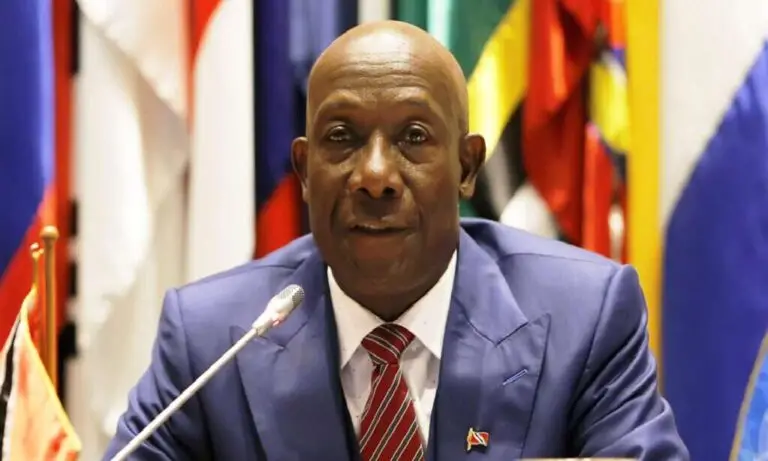
Despite the Prime Minister, Dr. Keith Rowley, being out of the country, the protests were unyielding, with workers from the Trinidad and Tobago Electricity Commission (T&TEC) joining the action. Originally slated for another location, the protestors redirected their efforts to Dr. Rowley’s residence in St. Ann’s to make their voices heard. OWTU President General Ancel Roget vowed that the protests would escalate unless the government addressed the workers’ concerns.
The protests highlight the growing tension between the political leadership and the workforce, especially as the government’s proposal comes at a time when many workers have not seen meaningful wage increases for years. Roget, in his address, pointed to the fact that T&TEC employees have been waiting since 2014 for a salary hike, with little progress on ongoing negotiations.
Roget also voiced concern about the country’s worsening economic conditions under the current administration, citing rising costs of living and a lack of tangible improvements in sectors like crime, energy, and infrastructure. He called the politicians’ salary hikes “a slap in the face” to the people who continue to struggle.
The Joint Trade Union Movement (JTUM) has also condemned the government’s actions, describing the salary increases as a “blatant disregard” for the challenges faced by the majority of citizens. David Abdulah, leader of the Movement for Social Justice (MSJ), argued that the justification for the raises—politicians’ hard work—was dismissive of the sacrifices made by the nation’s public servants, many of whom have faced years of stagnated wages and minimal increases.
Abdulah further questioned the integrity of a government that, in his view, is more focused on enriching itself than addressing the nation’s pressing issues. He urged citizens to continue pushing for change, suggesting that mass protests could force the government to reconsider its stance.
The protests have sparked a wider conversation about economic inequality, government accountability, and the balance of power between the political class and the public. With the unions pledging to continue their fight, it remains to be seen whether the government will respond to the mounting pressure or if the workers’ discontent will grow into a more widespread movement.