
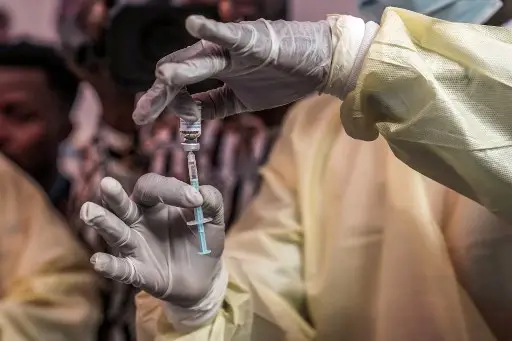

The Democratic Republic of Congo has commenced a critical vaccination campaign against mpox in the eastern city of Goma, following delays attributed to logistical challenges. The campaign kicked off on Saturday, with initial doses administered to healthcare workers. This initiative comes as the country grapples with a significant mpox outbreak that began last year.
The vaccination drive was initially set to launch last Wednesday but faced setbacks in transporting vaccines across the vast and underdeveloped regions of the central African nation. From Monday onwards, the program is expected to expand to include the general public in areas most affected by the outbreak.
Jeannine Muhavi, a doctor and the first individual vaccinated, emphasized the importance of protection for frontline workers: “As a doctor, I’m on the front line and in constant contact with those who are sick… I want to protect myself,” she stated.
In Goma, local health officials and NGO personnel established vaccination tents and displayed banners bearing the message: “mpox exists,” raising awareness about the ongoing health crisis.
To date, the DRC has received 265,000 vaccine doses, aided by donations from the United States and the European Union. However, the nation is still awaiting millions of additional doses promised by France, Japan, and the United States to further bolster its vaccination efforts.
According to Health Minister Samuel-Roger Kamba, the DRC has reported over 30,000 mpox cases and nearly 988 fatalities since the beginning of the year, with children under five comprising 70% of the deaths. “It will not be a mass vaccination campaign… the strategy is to vaccinate people most at risk,” Kamba explained during a press briefing in Kinshasa. “As you can imagine, in a country of 100 million people, we’re not going to solve the problem with 265,000 doses.”
The current vaccine supply, produced by Danish pharmaceutical company Bavarian Nordic, is designed exclusively for adults. Ongoing discussions are in place to secure additional supplies from Japan, where an alternative mpox vaccine is approved for both adult and pediatric use, with Japan pledging three million doses to the DRC.
In a recent commitment to address the crisis, U.S. President Joe Biden announced plans to donate one million doses of the mpox vaccine to African nations. “We are ready to commit $500 million to help African countries prevent and respond to mpox,” he said during the UN General Assembly in New York.
Furthermore, the World Health Organization (WHO) recently approved the first diagnostic test for mpox, allowing for detection from swabs of human lesions. Kamba noted that the WHO has pledged approximately 4,500 tests for the DRC, though no specific arrival date has been provided.
Mpox, previously known as monkeypox, was first identified in 1958 among research monkeys in Denmark and was later detected in humans in 1970 in what is now the DRC. The disease is characterized by painful rashes, fever, and severe fatigue, and can be fatal in certain cases.
This year, the virus has been reported in 16 African countries, according to the Africa Centres for Disease Control and Prevention (Africa CDC). Mpox gained global attention in May 2022 when a strain known as clade 2b began circulating internationally, primarily affecting gay and bisexual men. The WHO subsequently declared a Public Health Emergency of International Concern in July 2022, marking its highest alert level.