

In a dramatic escalation of tensions in the Middle East, Israel has reportedly killed Hezbollah leader Hassan Nasrallah in a significant airstrike in southern Beirut. The attack, which took place on Friday, marks a pivotal moment in the ongoing conflict between Israel and Hezbollah, with Israeli Prime Minister Benjamin Netanyahu characterizing it as a “turning point” for the nation.
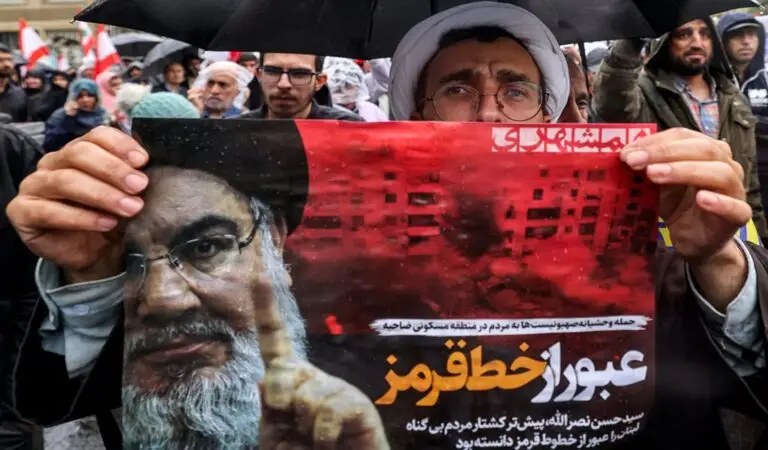
Hezbollah confirmed Nasrallah’s death shortly after the Israeli military announced the strike, which targeted the militant group’s stronghold in the southern suburbs of the Lebanese capital. The loss of Nasrallah, who has been a prominent figure in the region for nearly three decades, sent shockwaves through Lebanon, where his supporters initially struggled to accept the news, leading to widespread mourning.
While some Israelis celebrated the announcement, viewing it as a significant blow to Hezbollah, the reaction in Lebanon was one of disbelief and sorrow. A statement from Hezbollah referred to Nasrallah as having joined “his great, immortal martyr comrades,” emphasizing his longstanding leadership role within the group.
Netanyahu defended the operation, claiming it avenged the deaths of Israelis and citizens from other nations, including Americans, at the hands of Hezbollah. He noted that as long as Nasrallah remained alive, he posed a continuous threat to Israel’s security.
In the wake of the airstrike, Israel intensified its military operations in Lebanon, launching further attacks on targets associated with Hezbollah. This includes a strike on a warehouse near Beirut’s airport, as the Israeli military aims to disrupt arms shipments believed to be facilitated by Iran, a key backer of Hezbollah.
The regional response to Nasrallah’s killing has been mixed. While Iranian officials condemned the act and promised retaliation, others in the region expressed concern about the potential for increased violence. Iranian leadership described the killing as an unjust act, vowing that it would lead to dire consequences for Israel.
The aftermath of the airstrike has already begun to unfold, with reports of more than 700 casualties in Lebanon due to Israel’s military operations in recent weeks. The humanitarian crisis in the region has intensified, with over 200,000 people displaced within Lebanon and thousands fleeing to neighboring Syria.
The death of Nasrallah is viewed as a critical juncture for Hezbollah, which faces immense pressure to respond decisively in order to maintain its influence and credibility. Analysts suggest that how Hezbollah reacts in the coming days will be crucial, as any perceived weakness could embolden its enemies.
As Israel continues its military campaign, the specter of further conflict looms large. Netanyahu has indicated a willingness to expand operations, asserting that Israel has the right to eliminate threats to its national security. The international community watches closely, with calls for de-escalation becoming increasingly urgent amidst fears of a broader regional conflict.